---
Publish Now: null
author:
- Maddie Tran
- Yujan Shrestha
cta_button_text: See End-to-End FDA Clearance
cta_case_studies:
- 145bd5b7-a754-80ee-aa5f-dcb427458972
- 141bd5b7-a754-80c4-8e9a-fa24807a2e59
- 14abd5b7-a754-80dc-ba3b-f361c0bcfd49
cta_hero_details: 50+ FDA-cleared SaMD. Four-month software documentation turnarounds.
510(k) clearances delivered in as little as nine months. If you\'re scoping a digital
pathology AI program from scratch, hire the team that can do it all.
cta_hero_text: Hire one team that does it all.
date: '2026-05-09'
description: 'Deep dive into four FDA De Novo and 510(k) submissions for AI-powered
whole slide image analysis in pathology: Paige Prostate (DEN200080), ArteraAI Prostate
(DEN240068), Galen Second Read (K241232), and Genius Cervical AI (DEN210035). Pulls
out the regulatory patterns, validation designs, and product strategy signals that
matter for teams building AI/ML-based pathology software.'
related: []
title: 'AI in the Pathology Lab: How FDA is Clearing WSI Algorithms- Four Submissions,
One Emerging Playbook'
topics:
- Regulatory
- AI/ML
---

## Executive summary
- **De Novo is the dominant pathway for novel AI pathology software.** Three of the four devices reviewed were cleared through De Novo, reflecting the limited predicate landscape at the time of submission.
- **Adjunct positioning is consistent across all devices.** Each product is explicitly intended to support, not replace, the pathologist. This framing aligns with FDA risk expectations and simplifies validation.
- **Scanner dependence is a key market constraint.** All devices are cleared for use with the Philips Ultra Fast Scanner. This is a deliberate and recurring design decision.
- **Detection claims are more straightforward than prognostic claims.** Detection devices rely on analytical performance and reader studies. Prognostic devices require longitudinal outcomes and substantially greater clinical evidence.
- **Predetermined Change Control Plans (PCCPs) are emerging as standard practice.** They enable controlled post-market expansion, such as adding compatible scanners, without requiring a new submission
## What these four submissions cover
Our FDA Device Explorer search for AI-assisted whole slide image (WSI) analysis in pathology turns up a tightly clustered group of products. We looked at four: two focused on prostate cancer detection (Paige Prostate and Galen Second Read), one on prostate cancer prognosis (ArteraAI Prostate), and one on cervical cytology screening (Genius Cervical AI). Together they span 2021 to 2025, three De Novo classifications and one 510(k), and two distinct regulatory product codes under 21 CFR 864.
| Submission | Type | Decision Date | Regulation | Applicant |
|----------------------------------|---------|---------------|-----------------------|------------------------|
| DEN200080 --- Paige Prostate | De Novo | Sept 2021 | 21 CFR 864.3750 (QPN) | Paige.AI, Inc. |
| DEN240068 --- ArteraAI Prostate | De Novo | July 2025 | 21 CFR 864.3755 (SFH) | Artera, Inc. |
| K241232 --- Galen Second Read | 510(k) | Jan 2025 | 21 CFR 864.3750 (QPN) | Ibex Medical Analytics |
| DEN210035 --- Genius Cervical AI | De Novo | Jan 2024 | 21 CFR 864.3900 (QYV) | Hologic, Inc. |
Paige Prostate established the product code QPN and the special controls under 21 CFR 864.3750 that Galen Second Read later used for its 510(k). That is the canonical predicate-building move: be first, shape the special controls, let others follow.
## The detection devices: Paige Prostate and Galen Second Read
### What they do
Both devices analyze H&E-stained prostate core needle biopsy WSIs from FFPE tissue and flag regions suspicious for prostate adenocarcinoma. The outputs are similar in structure.
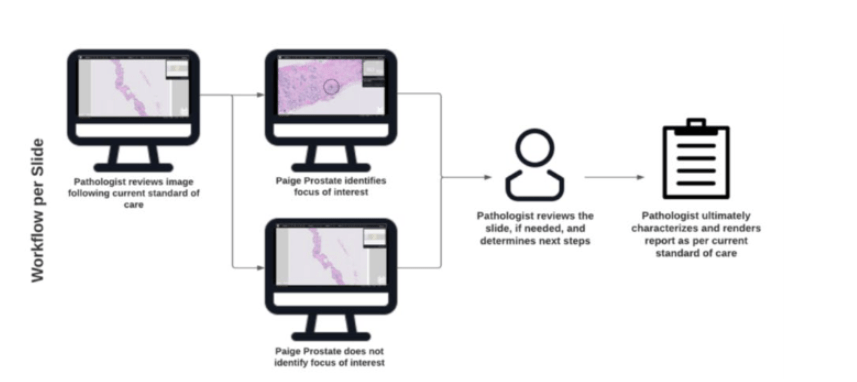
**Paige Prostate** provides a binary classification (suspicious / not suspicious). For suspicious slides, it outputs a single (X, Y) coordinate identifying the region with the highest cancer likelihood. The pathologist activates the device after completing their initial review. This workflow prevents algorithm anchoring.
Figure 1 : Paige Prostate Clinical Workflow
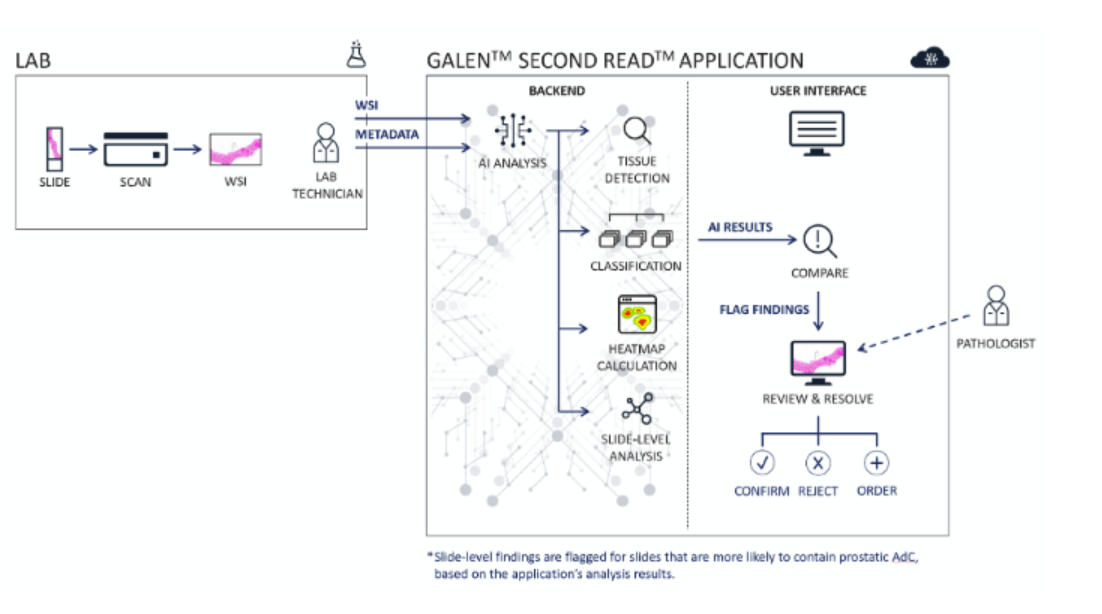
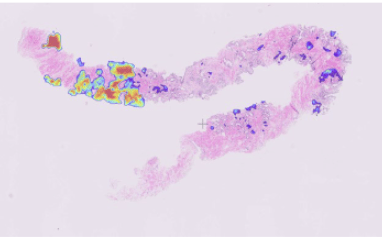
**Galen Second Read** operates in a narrower workflow. It only processes cases already diagnosed as benign by the pathologist. If suspicious morphology is detected, it generates slide-level alerts and a heatmap. The device is positioned as a second-read safety net, not a primary screener.
Figure 2: Galen Second Read Clinical Workflow
### Why the second-read framing is strategically smart
The Galen use case is narrower than Paige\'s, and that narrowness is a feature. By operating only on benign-diagnosed cases, Galen sidesteps the baseline performance comparison problem entirely. There is no argument about whether the algorithm performed as well as the pathologist\'s primary read. The device exists to catch the cases that were initially missed.
This kind of use-case scoping is one of the cleanest risk-management moves available to AI pathology developers. A second-read indication has a clearly bounded patient population (already-diagnosed-benign cases), an obvious benefit hypothesis (reduce false negatives), and avoids any framing that implies replacing the primary diagnostic act. The tradeoff is market size: you\'re not helping every prostate biopsy, only the fraction that gets a benign call. But the regulatory path is correspondingly smoother.
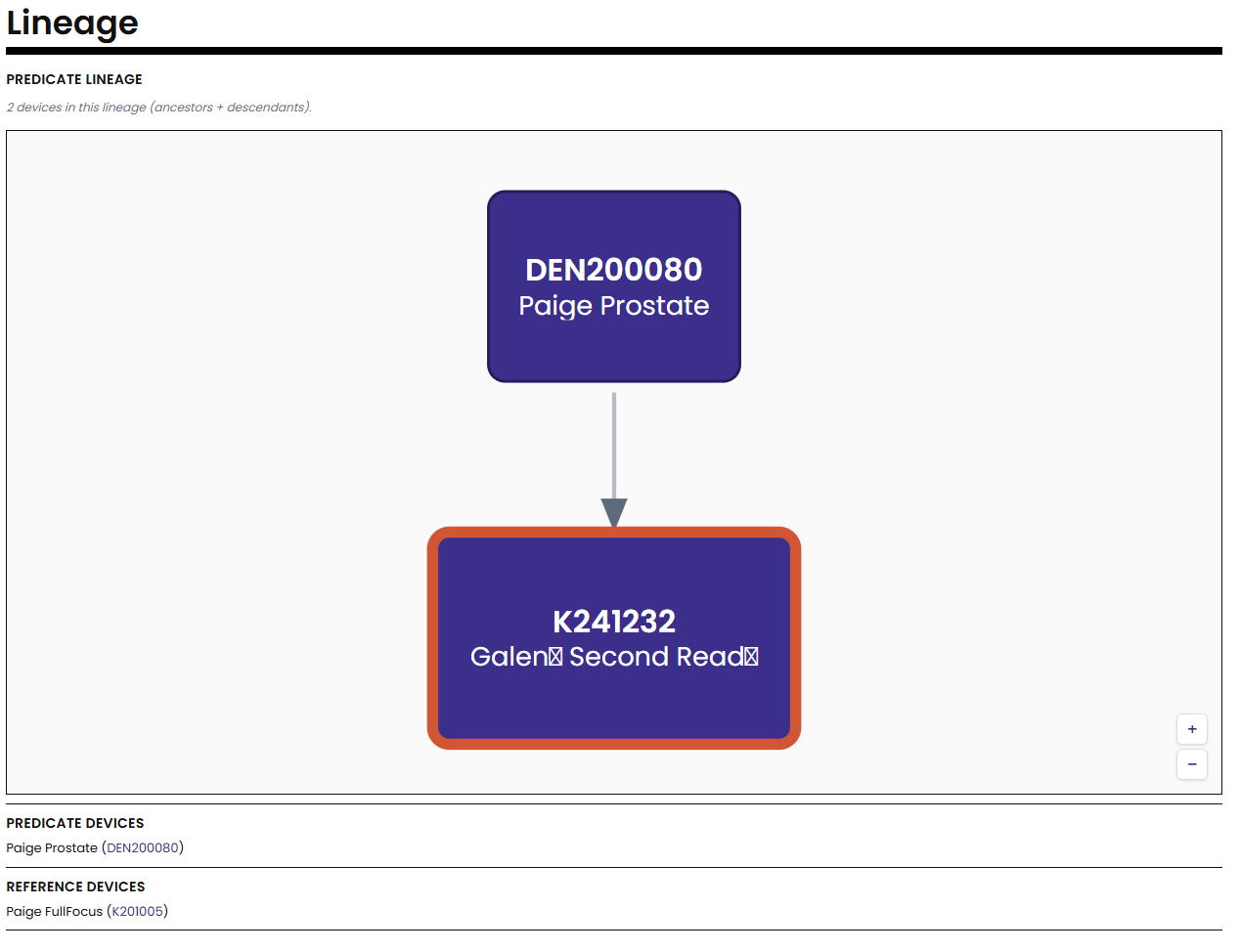
Figure 3: Innolitics FDA 510k Browser Lineage Tree
### How they were validated
**Paige Prostate** ran a two-part validation. The analytical performance study used 728 WSIs (311 cancer, 417 benign) to characterize sensitivity and specificity: sensitivity was 94.5% (294/311 true positives), specificity 94.0% (392/417 true negatives) when combining slide classification and localization correctness. The clinical reader study then put 16 pathologists through 527 cases in paired unassisted/assisted reads. The primary result: Paige Prostate reduced false negatives by 7.3% (95% CI: 3.9%--11.4%), a statistically significant improvement. The specificity difference (1.1%, CI: −0.7% to 3.4%) was not statistically significant, meaning pathologists saw fewer missed cancers without a meaningful increase in false positives.
**Galen Second Read** reported standalone performance against 347 initially-benign-diagnosed cases: slide-level sensitivity 81.0% (95% CI: 69.2%--92.9%), specificity 91.6%. The reader study used 772 cases read by 12 pathologists across 4 sites; with Galen, combined sensitivity improved from 90.5% to 93.9% while specificity shifted from 91.1% to 87.9%. The sensitivity-specificity tradeoff here is expected: adding a second-read algorithm catches more cancer but generates more prompts for pathologist review.
### The localization detail that matters
Paige provides a single (X, Y) coordinate. Galen provides a heatmap. These look similar but carry different implications for validation and risk:
A **coordinate** is easy to score, either it\'s in the annotated cancer region or it\'s not. The localization accuracy study for Paige showed the coordinate was within the annotated cancer region in 94.5% of cases (294/311). Straightforward to audit.
A **heatmap** is harder to score because it has a spatial extent. Galen\'s localization validation used a two-step approach: first demonstrating the full heatmap area had high sensitivity (mean 98.7%) for including cancer pixels, then demonstrating the \"warmest\" subarea had high specificity (100%) and PPV (99.6%). This means that the core heatmap region reliably contains cancer when it shows up. That design is thoughtful. It anticipates the reviewer question: \"if a pathologist only looks at the hot zone, how often are they being misled?\"
## ArteraAI Prostate: when detection becomes prognosis
### A different product entirely
ArteraAI Prostate was assigned a new product code (SFH) under 21 CFR 864.3755. This reflects a fundamentally different device claim, not an administrative change. Paige and Galen identify where cancer may be present. ArteraAI estimates patient outcomes over a 10-year horizon.
The device analyzes WSIs from treatment-naïve prostate biopsies and outputs three-category risk classifications, High, Intermediate, Low for 10-year risk of distant metastasis (DM) and prostate cancer specific mortality (PCSM). The intended patients are males 55 or older with non-metastatic prostate cancer who are candidates for curative-intent management. This device supports treatment decisions based on predicted outcomes, not cancer detection.
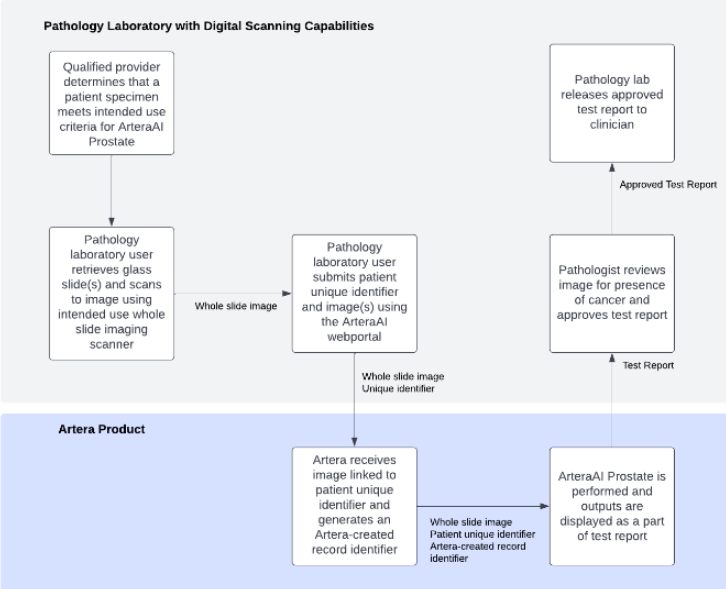
Figure 5: Artera AI Clinical Workflow
### What the clinical validation actually showed
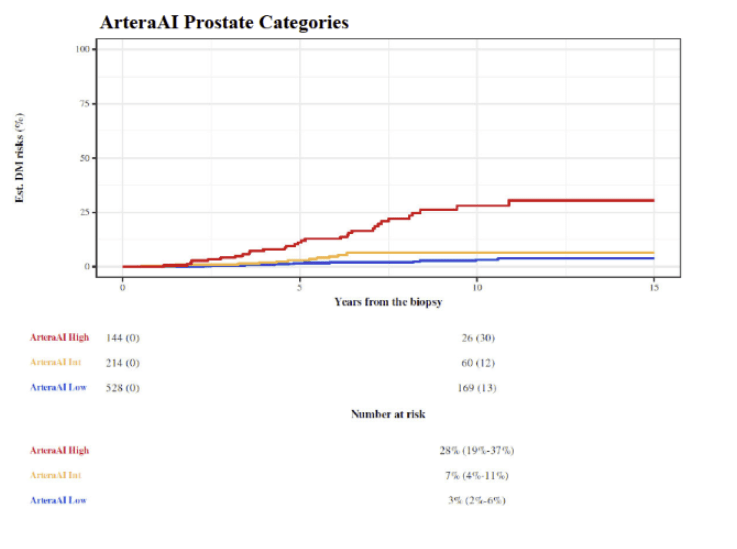
The pivotal study enrolled 886 patients across three US sites with median follow-up of 8.2 years. The primary endpoints were Kaplan-Meier estimates of 10-year DM and PCSM by ArteraAI risk category.
| ArteraAI Risk Category | % of Patients | 10-yr DM Risk | 10-yr PCSM Risk |
|------------------------|---------------|--------------------------|-------------------------|
| High | 16.3% | 28.1% (CI: 19.4%--37.5%) | 10.2% (CI: 4.7%--18.2%) |
| Intermediate | 24.2% | 6.6% (CI: 3.6%--10.8%) | 1.1% (CI: 0.2%--3.7%) |
| Low | 59.6% | 3.3% (CI: 1.8%--5.6%) | 0.6% (CI: 0.1%--2.0%) |
| Overall | --- | 8.1% (CI: 6.1%--10.4%) | 2.3% (CI: 1.2%--3.8%) |
The separation between High and Low categories is the heart of the clinical story. High-risk patients have a 28.1% 10-year DM risk versus 3.3% for Low, a difference that is both statistically significant and, at 20 percentage points, clinically meaningful. The device is intended to help physicians decide between active surveillance, radiation therapy, and surgery, so the prognostic separation directly maps to the clinical decision at hand.
Figure 6: Artera AI Kaplan-Meier Curves
The study also included a subgroup analysis for African American patients (N=72). Higher risk estimates were observed across all categories (High: 35.6% vs. 27.4%; Low: 9.0% vs. 2.9%) compared to non-African American patients. The submission acknowledged the limited sample size and called for care when interpreting these estimates.
### The validation burden of a prognostic claim
Detection devices rely on reader studies and localization accuracy. Prognostic devices require survival data. These outcomes require long follow-up and cannot be generated in short-term studies. ArteraAI's development dataset included 12 clinical trial cohorts and observational datasets with long-term follow-up. The pivotal study required patients diagnosed as early as 2005 to support 10-year endpoints.
Prognostic models therefore require longer development and validation timelines.
### The algorithm architecture tells you something
ArteraAI uses self-supervised learning to extract features from WSIs, then applies those features to estimate risk. The algorithm is locked, not a continuous learning model. That distinction matters for regulatory purposes: a locked algorithm is predictable, auditable, and can be validated once. A continually learning model raises entirely different questions about how validation stays current.
The device also included a **Predetermined Change Control Plan (PCCP)** for qualifying additional interoperable scanners. The current cleared configuration only accepts WSIs from the Philips Ultra Fast Scanner. The PCCP defines the protocol for adding scanners without a new submission, which is the practical path for scaling the product beyond the Philips install base.
## Genius Cervical AI: a different organ, a different problem
### Why this one stands apart
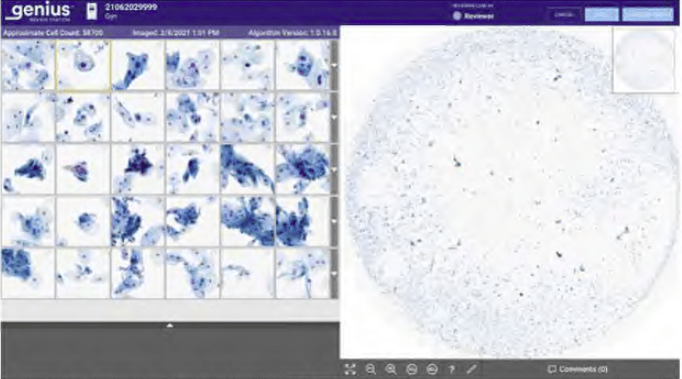
Hologic\'s Genius Cervical AI is not a prostate biopsy device. It operates on ThinPrep Pap test slides (liquid-based cervical cytology) using a Convolutional Neural Network to select and present objects of interest (OOIs) for cytologist review. The device is part of an integrated hardware-software system including the Genius Digital Imager, Image Management Server, and Review Station. Unlike the cloud-hosted Paige and Galen systems, this is an on-premises appliance.
The clinical task is also different. Cervical cancer screening involves a spectrum of diagnoses (NILM, ASCUS, LSIL, HSIL, carcinoma) across a large population with high volume and often low prevalence of significant findings. The Genius AI algorithm is not design to diagnose. The device curates a gallery of the most significant-looking cells for the reviewer to examine, organized by Bethesda System categories.
### What the device outputs
The algorithm selects 5 rows × 6 primary OOIs per case, organized by diagnostic priority (abnormal cells first, specimen adequacy cells last, organisms last). The reviewer sees this curated gallery on the high-resolution Barco display alongside the whole slide image. The display hardware is part of the cleared system.
Figure 7: Hologic's Genius Cervical AI Output
This is worth noting for AI/ML device developers: when the clinical workflow requires specific display characteristics (color accuracy, resolution, calibration), the display often becomes part of the cleared device. That adds complexity to the bill of materials and the post-market monitoring surface.
### The integrated system model vs. software-only
Three of the four submissions are software-only devices that work with validated external scanners. Genius is an integrated system where the scanner, software, server, and display are all part of the cleared configuration. The technical performance assessment section of the decision summary is correspondingly longer. Technical performance assessment covers light source specifications, optical design, stage movement, sensor characteristics, and focus validation in addition to the AI algorithm itself.
For a team choosing between a software-only and an integrated-system approach: the software-only path decouples you from hardware development and supply chains, but it makes you dependent on scanner partners and their FDA clearance status. The integrated path gives you control but multiplies the verification and validation surface substantially.
## Patterns across all four submissions
### The Philips scanner bridge
All four devices require the Philips IntelliSite Ultra Fast Scanner. This reflects early FDA clearance under 21 CFR 864.3750 and its adoption in training and validation datasets. For new entrants, validation on the Philips scanner is effectively required to match existing clearances. Single-scanner validation limits deployment. Multi-scanner validation expands it but increases study scope.
ArteraAI addressed this with a Predetermined Change Control Plan (PCCP). It defined a scanner qualification protocol and applied it to new scanners without a new submission.
### The \"adjunct, not standalone\" requirement is enforced in labeling
Every device in this set carries explicit limiting statements specifying that outputs are not intended for standalone diagnosis, that pathologists should use the device in conjunction with complete standard-of-care evaluation, and that the final diagnosis is made by the pathologist. These statements are required by Special control requirements. Special Control requirements are written into the regulation. 21 CFR 864.3750(b)(1)(vi) requires \"a limiting statement that addresses use of the device as an adjunct.\" If you\'re building a pathology AI device, this language must appear in your labeling, and your validation must be designed around an adjunct workflow.
### Training dataset transparency is required, not optional
The special controls for 21 CFR 864.3750 require \"(B) The training dataset must include cases representing different pre-analytical variables representative of the conditions likely to be encountered when used as intended (e.g., fixation type and time, histology slide processing techniques, challenging diagnostic cases, multiple sites, patient demographics, etc.).\"
All four decision summaries include detailed breakdowns of training, tuning, and test dataset characteristics. Dataset characteristics included race distributions, site diversity (sometimes spanning hundreds of external sites), Gleason grade distributions, and scan settings. If your dataset is homogeneous, that becomes a finding in review, not just a limitation to disclose.
### Subgroup analysis is expected
Every submission includes subgroup performance stratification. For prostate devices this typically covers Gleason grade group, NCCN risk category, slide source (internal vs. external sites), and race (Black/African American vs. non-African American). The 2021 Paige submission\'s race breakdown (8.4% Black, 80.7% White in the cancer cohort) and the 2025 ArteraAI finding of higher risk estimates in African American patients signal that this is an active area of scrutiny that won\'t get easier over time.
### \"Locked algorithm\" is the safe default
None of these devices are approved for continuous learning. All are locked algorithms validated at a specific version. The regulatory preference enables the validation evidence to remain representative of the deployed device. A model that changes post-deployment invalidates the premarket validation.
The path to algorithm updates is either a new submission or a PCCP that pre-specifies what changes are allowed and how they\'ll be validated. Both impose process overhead, but the PCCP approach (when scoped to model improvements rather than indication expansion) is increasingly viable and faster.
## What this means if you\'re building AI pathology software
**Define your clinical claim first, then work backward.** The regulatory classification directly correlates with the validation burden. \"Detect cancer\" (detection) and \"predict 10-year mortality\" (prognosis) are not the same regulatory challenge. \"Assist detection\" and \"replace the pathologist\" are not the same claim. These claims determine your product code, your special controls, and whether you need a reader study or a survival analysis.
**Pick your scanner strategy early.** If you\'re building for the US market, the Philips UFS is the baseline assumption. Building a PCCP for scanner expansion from the start is significantly easier than retrofitting it later. Alternatively, if you have the resources to validate on multiple scanners before submission, you buy deployment flexibility at the cost of a larger validation study.
**The second-read framing is underused.** Galen\'s \"only process benign-diagnosed cases\" scoping is elegant because it\'s honest about where AI adds the most value: catching the cases that humans initially miss. If you\'re struggling to show that your algorithm improves on the pathologist in a head-to-head comparison, ask whether a second-read indication might be better supported by your evidence.
**Subgroup diversity is table stakes, not a stretch goal.** The special controls require it. The reviewers will look for it. Build your training cohort strategy around meaningful geographic and demographic diversity from the start.
## About Innolitics
Innolitics is a software and regulatory consulting firm focused on AI/ML Software as a Medical Device. Founded in 2012. Headquartered in Austin. Fully remote. Never taken on debt.
What we bring to AI/ML SaMD work:
- **70+ medical devices built. 50+ FDA-cleared SaMD.** Many of them AI/ML, across radiology, pathology, cardiology, and digital cytology. We\'ve worked on multiple WSI and image-analysis programs across detection and prognostic claims.
- **Engineers and regulatory experts in one team.** Our software engineers write the submission documentation alongside our regulatory consultants. The seam between what the product does and what the submission claims is where most clearances fall apart. We close it.
- **MedtechOS.** A purpose-built platform of templates, tools, and process refined across a decade of submissions. Not an eQMS. A full medical-device startup-in-a-box that our team uses on client work daily.
- **End-to-end FDA clearance under one roof.** AI/ML strategy and pre-submission, study design (including MRMC and survival analyses), software engineering, QMS, cybersecurity, V&V, submission, and post-market --- one accountable team, one timeline.
- **Working knowledge of the data, not just the rules.** We use agentic AI for FDA-regulated software daily. It works. The FDA Device Explorer used in this analysis is one of the public tools we built and maintain --- free, because reducing information asymmetry is part of the mission.
Four-month software documentation turnarounds. 510(k) clearances delivered in three months. Pre-submission feedback where the FDA called our team \"extremely advanced\" on AI/ML CADe questions. That\'s the bar.
If you\'re scoping a WSI program --- or any AI/ML SaMD --- and want to pressure-test your regulatory strategy against what\'s actually clearing, the resources, tools, and services live at [innolitics.com](http://innolitics.com/).