

I’ve watched too many device companies do everything right, get FDA-cleared, and then stall out because no one will pay for their device. Evidence and payment are two separate mountains, and most teams don’t start on the second one until they’ve finished the first.
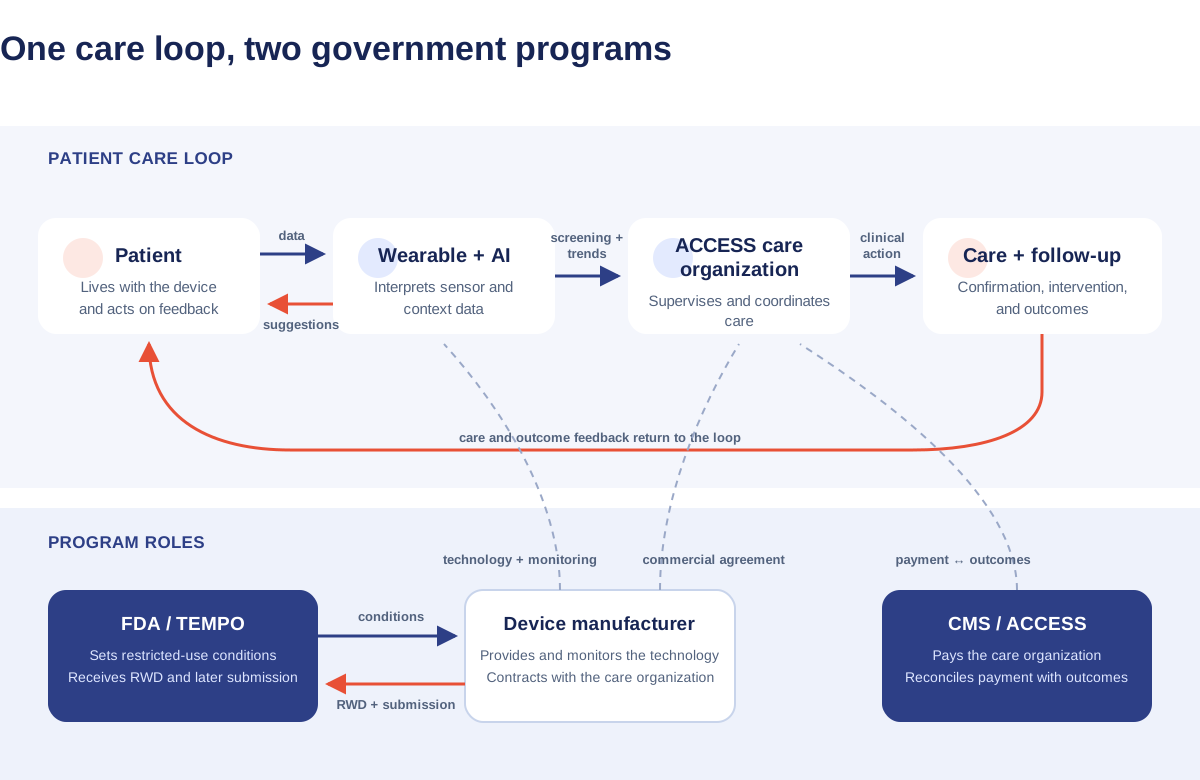
FDA and CMS have been building an answer to that. TEMPO, an FDA pilot that lets a company gather real-world evidence before clearance, and ACCESS, a CMS model that pays care organizations for outcomes, were designed to work together on the same care model. The next milestone in that evolution came on July 22, 2026, when FDA named Dexcom the first TEMPO participant. It’s the first time we get to see the two programs applied to a real device. The map above shows how they fit together.
Dexcom’s device is the concrete example. It combines glucose readings from its G7 and Stelo sensors with data on nutrition, activity, sleep, and stress, then uses AI to give patients wellness suggestions and help screen for prediabetes and type 2 diabetes. The first patient cohort is expected to begin this month.
This is more than another continuous glucose monitor. Stelo’s current FDA-authorized use includes measuring glucose and helping users understand how lifestyle choices affect it. It does not include screening for prediabetes or type 2 diabetes. Dexcom is proposing to add a new medical function while also testing whether the resulting care improves outcomes.
The Product Is a Feedback Loop, Not Just a Sensor 🔗
Wearables are already making tighter feedback loops common in general wellness. A watch or sensor collects data, software identifies a pattern, and the user changes a behavior. New data then shows whether the change helped.
The same loop is harder to implement as medical care. The data may support a screening conclusion, influence treatment, or trigger clinical follow-up. That raises questions about false alerts, missed disease, subgroup performance, escalation, clinician oversight, and whether the recommended action actually improves health.
Traditional visits do not disappear. They remain important for examination, laboratory testing, diagnosis, and treatment. What changes is the long interval between them. Visit-based care provides a few high-value snapshots. A wearable can add thousands of lower-context observations, and AI can reduce that stream to patterns that a patient and clinician can act on.
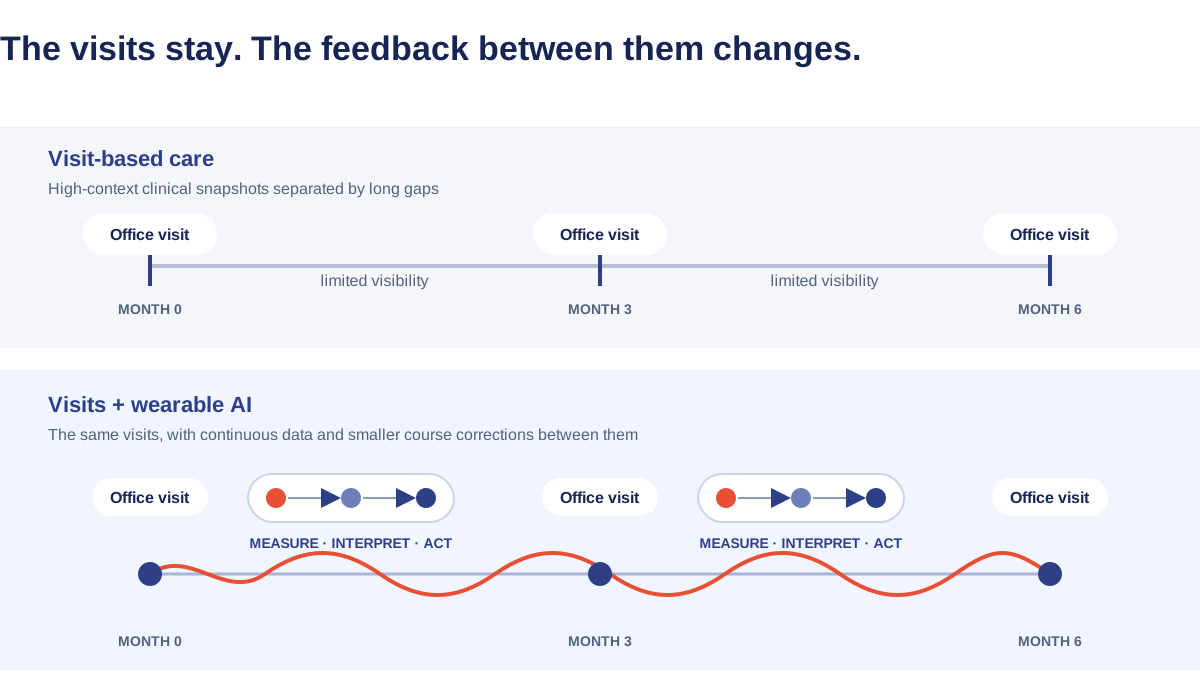
Without AI, continuous data can become a large record that no one has time to interpret. The value comes from closing the loop: measure, interpret, act, and measure again. That can happen repeatedly between visits instead of waiting months to learn whether a change worked.
Dexcom has publicly described two uses of AI: general wellness insights and an aid to screening. The first helps close the feedback loop above by turning glucose and lifestyle data into suggestions a patient can act on. The second informs a medical screening decision about who may have disease, so it requires stronger evidence.
Why Wearable Screening Requires So Much Evidence 🔗
That screening evidence is not yet established for continuous glucose monitoring. The American Diabetes Association's 2026 Standards of Care state that there is insufficient evidence to use continuous glucose monitoring for screening or diagnosis of prediabetes or diabetes.
The difficulty is not merely training a classifier. Opportunistic wearable data are collected during ordinary life rather than under a tightly controlled diagnostic protocol. Wear time varies. Meals, exercise, medication, illness, sleep, stress, and sensor gaps change the signal. Some users will provide a dense record; others will not provide enough data for a reliable result.
Prevalence also matters. A screening model used across a broad population may generate many false positives even with apparently strong sensitivity and specificity. A useful study therefore needs enough patients to estimate performance in the intended population, understand when the system should decline to produce a result, and test performance across demographic and clinically important subgroups. It also needs a defensible reference standard for determining who actually has the disease.
Apple's Hypertension Notification Feature is a useful precedent, although it is a different device and claim. The feature passively analyzes Apple Watch data over 30-day periods and notifies some users of patterns that may be consistent with hypertension. Apple reported more than 86,000 participants in initial model development, 9,800 in classifier development, and 2,229 enrolled in its clinical validation study. That scale illustrates why opportunistic screening evidence can be expensive and slow to collect before launch.
TEMPO does not eliminate those questions. It creates a pathway for manufacturers to answer them prior to market clearance.
TEMPO Creates a Controlled Early-Access Stage 🔗
TEMPO is not FDA clearance, approval, or authorization. FDA first reviews enough information to decide whether a finished device is suitable for the pilot. The agency may then use case-specific enforcement discretion and decline to enforce specified premarket or investigational requirements while the device is offered only through participating ACCESS organizations.
The manufacturer monitors the device, reports required information to FDA, and collects real-world data under an agreed plan. That evidence can later support a 510(k) or De Novo.
At Innolitics, we have been pushing FDA to move more of the AI-validation burden from the premarket phase to the postmarket phase. For the most part, FDA has continued to emphasize the premarket review. TEMPO, while not technically a postmarket pathway, does effectively delay the evidence burden:
- FDA performs an initial review (think of it as a lightweight premarket review).
- The device is selected for TEMPO and receives restricted access through case-specific enforcement discretion.
- The manufacturer gathers real-world evidence under clinician supervision (and may even be paid).
- The manufacturer submits the full 510(k) or De Novo later, using the collected RWE.
(I’m not a lawyer, but my interpretation is that FDA is using its enforcement-discretion authority under the FD&C act to approximate a regulatory stage that the existing device framework does not generally provide for moderate-risk products. FDA has postmarket surveillance authorities, but those authorities begin at or after authorization and do not amount to a general temporary 510(k) while core effectiveness evidence is collected.)
TEMPO may change when evidence is collected, but it does not necessarily lower the final evidence standard. FDA says it may require additional data, and selection does not predict a favorable decision on the later submission. What the pilot may reduce is the initial evidence barrier to tightly controlled use, where the remaining evidence can be generated more quickly and in the setting that matters.
ACCESS Makes the Payment Model Testable 🔗
The ACCESS Model addresses the other half of the commercialization problem. It is a voluntary, nationwide CMS Innovation Center model for Original Medicare that began in 2026 and is scheduled to run for ten years. Participating organizations manage patients for a 12-month care period in one of four clinical tracks:
- early cardiometabolic disease,
- cardiometabolic disease,
- chronic musculoskeletal pain, or
- depression and anxiety.
Instead of paying only for individual visits and procedures, CMS makes recurring Outcome-Aligned Payments to the ACCESS care organization. The organization reports clinical outcomes across its patient panel, and its final payment depends in part on how often patients achieve defined improvement or maintenance targets.
This gives the organization a reason to use remote care, coaching, monitoring, medication management, and AI-enabled devices, all tools that can improve outcomes between visits. Many of those AI-enabled devices have struggled to find reimbursement in the current visit-centric care model.
My experience running Innolitics has made me a big fan of outcome-based pricing. I’ve seen firsthand how billing design shapes behavior. Hourly billing pays a consulting firm for time and activity; it does not directly reward the firm for eliminating unnecessary work or reaching the answer sooner. Traditional fee-for-service medicine has a similar structural problem. Visits, tests, and procedures create billable events, while preventing a visit or resolving a problem through a more efficient feedback loop may not.
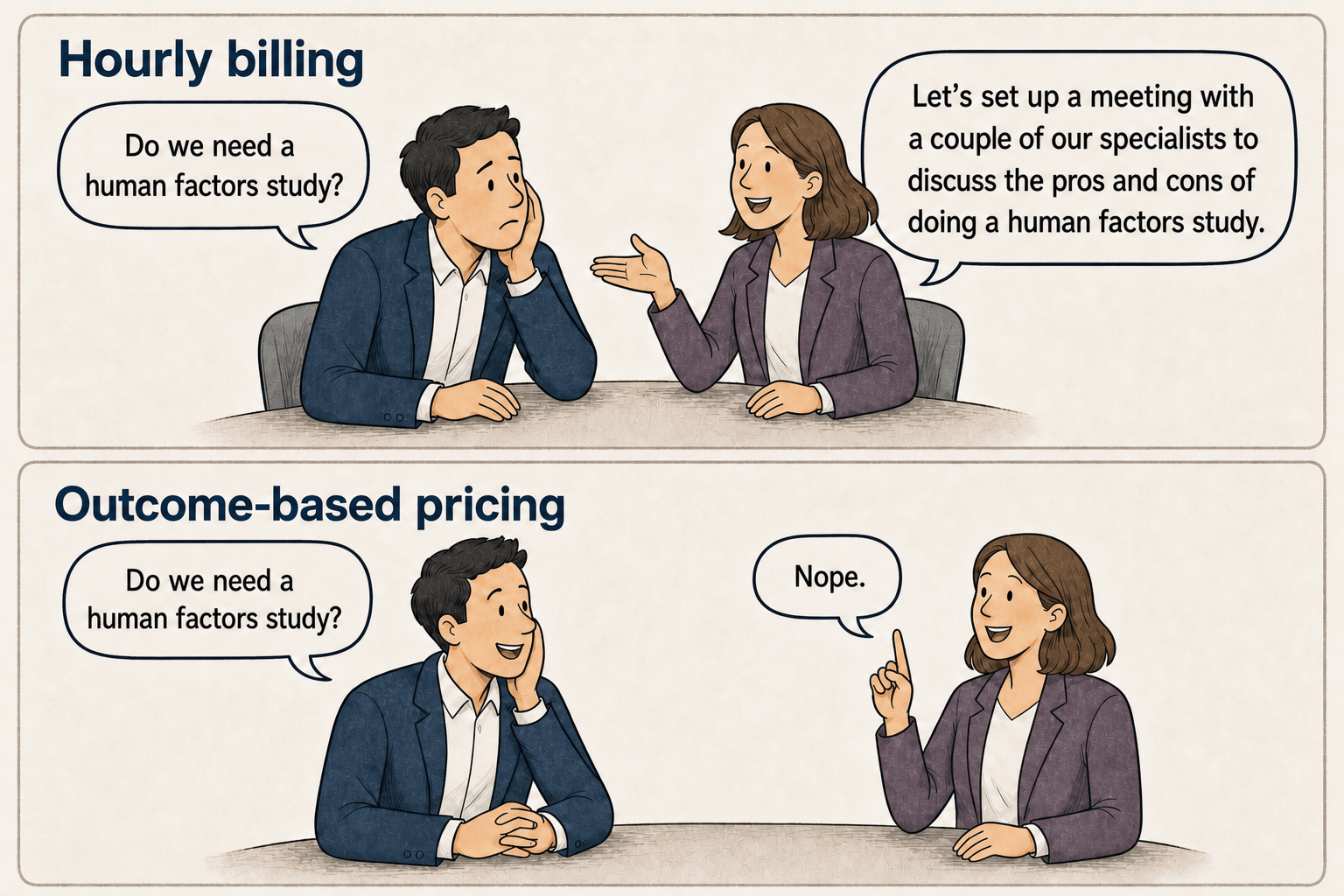
That does not mean consultants or clinicians deliberately make work take longer. It means the economic model rewards activity more directly than efficiency. This is a particular problem for AI-enabled devices. Some make an existing task faster. Others enable continuous monitoring, earlier intervention, or care that requires fewer office visits. If the only reliably paid event is the visit or procedure that the technology reduces, the provider may have no sustainable way to adopt it.
ACCESS aligns those incentives. By paying for improvement or maintenance over a care period, CMS gives participating organizations more freedom to choose the combination of people, software, devices, and encounters that produces the outcome. A tighter wearable-AI feedback loop can then be economically useful even when part of its value comes from avoiding unnecessary care.
The payment does not go automatically to Dexcom or another device manufacturer. A manufacturer would need to qualify as an ACCESS care organization or contract with one. The parties still need a commercial arrangement that pays for the technology, services, and support. ACCESS supplies the care-payment pathway; it is not a new reimbursement code for the device.
This separation is a strength. FDA can focus on whether the device is sufficiently safe for restricted use and whether the evidence plan can support authorization. CMS can focus on whether the care model improves measurable outcomes and avoids duplicative spending. The manufacturer and care organization can learn whether the clinical workflow and economics work before a broad commercial launch.
It also creates a harder, more useful test than obtaining coverage for a technology in isolation. A diagnostic AI device has value only if its output leads to appropriate follow-up and better care. ACCESS places the device inside that downstream workflow.
Who Can Participate in TEMPO? 🔗
FDA expects to select up to approximately ten manufacturers in each eligible clinical area. The pilot is aimed at U.S.-based manufacturers with a finished device intended for clinician-supervised outpatient care. The device cannot present a potential for serious risk, and FDA must see a reasonable expectation of benefit.
Eligible uses fall within the conditions covered by ACCESS:
- Early cardiometabolic disease, including hypertension, dyslipidemia, overweight or obesity, and prediabetes
- Cardiometabolic disease, including diabetes, chronic kidney disease, and atherosclerotic cardiovascular disease
- Chronic musculoskeletal pain
- Depression and anxiety
A device may already be authorized for one use and enter TEMPO for a new use that is not yet authorized. That appears to be the relevant pattern for Dexcom: the underlying glucose sensors are already marketed, while the screening and integrated care functions extend beyond the existing labeling.
Before selection, FDA may request the proposed claims, existing safety and functionality data, quality-system information, risk controls, and a detailed real-world evidence plan. The plan may include performance goals, a statistical analysis plan, interim reporting, and a schedule for the eventual marketing submission. FDA has also described short, focused “sprint” discussions to reach agreement on issues that will affect the later submission.
That means TEMPO is most plausible for a company that has already built a functioning product and can defend its basic safety, software quality, risk management, and data infrastructure. It is not a mechanism for exposing patients to an early prototype in order to find out whether it works.
The Bigger Picture 🔗
For a lot of chronic conditions, continuous, AI-managed care is simply better medicine than a handful of visits a year. A tight feedback loop catches problems earlier, adjusts treatment sooner, and shows whether a change worked in weeks instead of at the next appointment. By building a pilot around that model, FDA is implicitly recognizing how much power these new care models have.
Whether or not this particular pilot pans out the way we hope, something else will replace it. And if it doesn't, public demand for these technologies may keep building until it forces change on its own, possibly even statutory changes to the FD&C Act.
Mostly, though, I'm glad FDA is experimenting and trying to keep up. That's admirable, and TEMPO looks like a promising platform.
If you're thinking about applying to TEMPO, reach out. We'd be happy to help you navigate the discussion with FDA.
Sources 🔗
- FDA announces Dexcom as the first TEMPO participant
- FDA TEMPO Digital Health Devices Pilot
- Federal Register notice establishing TEMPO
- CMS ACCESS Model
- CMS ACCESS Request for Applications
- Dexcom TEMPO announcement
- Dexcom generative AI platform announcement
- FDA decision summary for Stelo, K260935
- FDA 510(k) summary for Apple's Hypertension Notification Feature, K250507
- FDA Section 522 Postmarket Surveillance Program
- ADA 2026 Standards of Care: Diagnosis and Classification of Diabetes