
Neosoma
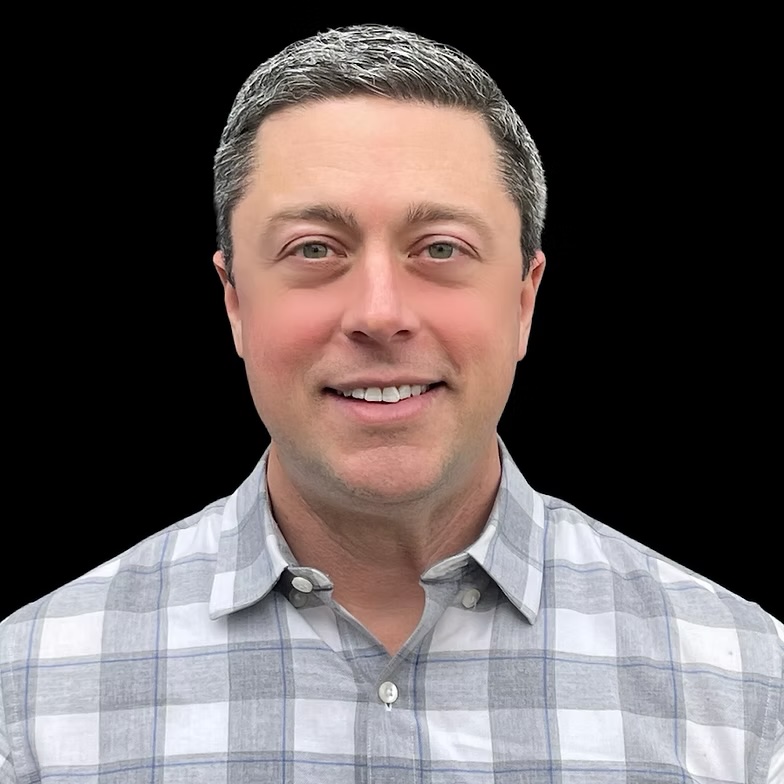
Co-Founder and CEO

Neosoma already had one FDA-cleared AI product. They were ready to get their second product cleared — fast — without re-submitting the entire platform. We designed a modular regulatory architecture that isolated the new CNN as the only component under review, got FDA clearance in 3 months with zero major deficiencies, and built a reusable framework that turns every future tumor type into a lightweight module swap. The result: 15 months from kickoff to clearance, an AINN deficiency resolved in 6 days, and a regulatory template that makes Neosoma's third, fourth, and fifth clearances dramatically faster than their first.

By isolating the new CNN as the only component under FDA review, we kept Neosoma's entire existing platform out of scope. The result was a clean 3-month clearance with no major deficiencies and an AINN response completed in under a week culminating in FDA 510(k) clearance of Neosoma Brain Mets (K252922) on December 17, 2025. Neosoma now has a repeatable submission template for every indication on their roadmap.

Neosoma isn't building a single AI product. They're building a platform — a modular brain tumor AI engine designed to serve the multidisciplinary team across every major tumor type. Their first product, Neosoma Glioma (K221738), was FDA-cleared in 2022 for high-grade glioma segmentation, making Neosoma one of a small number of companies with a commercially cleared AI tool in neuro-oncology.
The next move was brain metastases — the most common brain tumor, affecting 20–40% of all adult cancer patients — and a significantly larger addressable market. Neosoma Brain Mets uses a CNN to automatically identify, segment, and track brain metastases on routinely-acquired MRI sequences, integrated directly into PACS workflows. It's the kind of product hospital systems are actively looking for — and Neosoma had the clinical relationships and technical infrastructure to deliver it.
But the company faced a question every multi-product AI platform eventually hits: how do you clear a new indication without re-submitting the entire system?
The conventional approach — re-submitting everything — comes with real costs: months of redundant documentation, cybersecurity re-assessment of unchanged components, and compliance headaches that compound with every future indication. Neosoma's leadership recognized this early and sought a regulatory strategy designed from the software architecture, not around it.

This strategy required a partner that understands the software itself — not just FDA. Innolitics is a medical-device software company first: four AI/ML and image-processing experts (including two PhDs), deep fluency in DICOM and PACS integration standards, a clinical perspective guided by our MD co-founder, and experience across 70+ medical devices since 2012. All we do is medical-device software — which is why we could read Neosoma's CNN architecture and see the regulatory opportunity a purely regulatory-focused firm would miss.
Neosoma's platform already had the right components. Pre-processing, post-processing, PACS integration, the user interface, and cloud infrastructure were all functionally independent of the segmentation engine. Our deep DICOM expertise let us confidently draw the boundary between the PACS integration layer and the segmentation engine — and defend it to FDA. If the submission drew a clean boundary around just the CNN model, FDA wouldn't need to re-review anything that hadn't changed.
What we protected from re-clearance: the entire pre-processing pipeline, post-processing, DICOM/PACS workflow, user interface, and cloud infrastructure (CloudFront, S3, SQS, Lambda) — all already cleared in Neosoma Glioma.
What actually needed clearance: one thing — the new CNN model trained on brain metastases instead of gliomas.
The new module plugs in via standardized APIs without touching anything already validated. No re-testing pre-processing. No re-validating DICOM workflows. No cybersecurity re-assessment of unchanged components. Just validate the CNN's segmentation performance on brain metastases. The Pre-Sub package, eSTAR structure, and cybersecurity documentation were all adapted from Innolitics' proven templates — refined across 50+ SaMD/SiMD clearances — rather than built from scratch.
We also flipped the predicate strategy — switching from Neosoma Glioma as primary predicate to VBrain (K203235) as primary, with Neosoma Glioma as secondary. This positioned VBrain as the clinical precedent for brain tumor segmentation while Neosoma Glioma demonstrated the technological approach through transfer learning and modular architecture. The dual-predicate template is reusable for every future indication.

This wasn't just about making one submission easier. It was about building a regulatory architecture that mirrors the software architecture — so every future indication becomes a lightweight module swap.
Neosoma's first clearance was monolithic: the AI model, cloud infrastructure, PACS integration, cybersecurity — all scoped as one device. That works once, but creates a trap: every subsequent indication requires re-documenting and re-validating the entire platform.
The modular approach limiting the cybersecurity scope, dropped the validation effort proportionally, and compressed time to market. The 510(k) was submitted just 6 months after the FDA Pre-Sub meeting and cleared 4 months later.
The real payoff comes next. Meningiomas, acoustic neuromas, pediatric gliomas, OAR auto-segmentation — each follows the same pattern: train a CNN, validate performance, submit. Same architecture, same API contract, same submission template — just a different set of weights. The marginal cost and time of each new indication drops while the total addressable market grows with every cleared tumor type.

When FDA challenged segmentation performance (they always challenge something), the Innolitics cross-functional team mobilized within hours — drawing on AI/ML expertise and prior FDA submission precedent. Neosoma's engineering team moved just as fast, reanalyzing their performance data and confirming excellent performance, consistent with the best cleared devices in the space.
AINN response submitted November 20, 2025 — six days after receiving the letter. Cleared five weeks later. Zero additional deficiencies.
With two FDA clearances and a proven modular framework, Neosoma has built what most AI medical device companies are still trying to figure out: a repeatable, scalable path from trained model to FDA clearance.
Their partnership with Microsoft's Nuance division provides an enterprise distribution channel that scales with product breadth. Every new cleared indication expands the value proposition to health systems already in the ecosystem — and once the platform is integrated into a hospital's PACS workflow, switching costs are high and expansion is natural.
Two FDA clearances. A regulatory framework that is just as agile as their technical framework. A distribution partnership already in place. Neosoma is positioned to become the standard platform for brain tumor AI in neuro-oncology.

Neosoma Inc. is building the leading modular platform for brain tumor AI in neuro-oncology. Two FDA clearances — Neosoma Glioma (K221738, 2022) and Neosoma Brain Mets (December 2025) — with a proven regulatory framework that turns new tumor types into fast, capital-efficient module additions. Distribution through Microsoft's Nuance division. Pipeline includes meningiomas, acoustic neuromas, pediatric indications, and OAR auto-segmentation. Neosoma isn't just competing in brain tumor AI — they're building the infrastructure to own the category.
Contact: neosomainc.com
All we do is medical-device software — and we do all of it. Regulatory strategy, AI/ML engineering, cybersecurity (threat modeling, SRM, SBOMs), DICOM/HL7 interoperability, and FDA submission execution — delivered by one integrated team of physicians, ML scientists, software engineers, and regulatory specialists with 70+ medical devices and 50+ SaMD/SiMD clearances since 2012. We don't just advise on software — we understand it deeply enough to design the regulatory strategy from the architecture itself.
Radiology
Prototype → 510(k) → QMS → FDA audit passed. Multi-year partnership with ongoing development.
Radiology
Gap analysis for an SaMD company that got audited that same year and passed with minimal findings
Radiology
Indistinguishable from Full-Time Staff. Software development and devops support for large existing engineering team
Every great partnership starts with a conversation. Fill out the form below for a discovery call, and an Innolitics team member will contact you soon.
I learned more from an hour-long Innolitics sales call than an entire paid engagement from other consultants.

Richard Clark
Executive in Residence at Washington University