Summary
Deep Reasoning AI Inc., a company founded by Cornell University AI professors, built NeuroDR: software that takes a head and neck CT angiography (CTA) scan and, with no manual steps, returns 3D and 2D views of the arteries that supply the brain. After a regulatory strategy phase that began in November 2025, we skipped the FDA Pre-Submission meeting because we already knew FDA's answers. The 510(k) build kicked off on February 2, 2026, and Innolitics submitted the eSTAR 20 weeks later, on June 24. FDA cleared NeuroDR on October 7, 2026 (K262134), 105 days after submission, after one round of FDA questions.
The Problem
CTA of the Circle of Willis (COW) and Carotid is a core exam for evaluating the carotid and vertebral arteries and the vessels of the brain. Before a physician can read those arteries well, someone has to strip away bone, soft tissue and veins, render the arterial tree in 3D, determine the centerline of the arteries, and trace each major artery along its length into a curved planar reformat. That post-processing takes skill and time, and it has to happen on every exam. Rapid stroke diagnosis is critical to identifying the appropriate intervention, as delays in treatment can lead to irreversible brain injury.
Deep Reasoning AI's technology, which combines AI reasoning with deep learning, was already producing accurate anatomical models in minutes. The models worked. The path to the U.S. market still had to be built.
The Challenge
- A fully automated, "headless" device in minutes. NeuroDR runs in the background and sends its images straight to a DICOM node. No manual input is needed and results are generated in under 5 minutes.
- Ground truth for small vessels. Expert annotation of the thin arteries inside the brain is hard to get right, and the performance results depended on it.
- Two partner companies, one submission. Deep Reasoning AI built the advanced software. Its collaborator 3DR Labs conducted the performance studies and provided clinical expertise. FDA needed one consistent account of both.
- A cyber device. A networked DICOM product reviewed under FDA's section 524B cybersecurity requirements.
- Startup constraints. A small but capable engineering team, with every month of delay pushing back revenue.
The Result
- 20 weeks from 510(k) kickoff to FDA submission
- 105 days from FDA submission to clearance
- 24 meetings with Innolitics, kickoff to submission
- About 1 hour a week of the client team's time in meetings
Innolitics wrote the submission. Deep Reasoning AI's engineers joined one hour-long sync a week, answered questions between meetings and reviewed drafts, while they kept building the product.
We skipped the Pre-Sub. Most first-time AI device companies ask FDA their questions in a Pre-Submission meeting, which typically adds about three months before the 510(k) is filed. We had already answered the same questions on similar cleared AI imaging devices: the predicate, the study design, the acceptance criteria. Deep Reasoning AI went straight to building the 510(k), and FDA's review confirmed those answers.
What We Did
- Skipped the Pre-Sub because we already knew the answers. Our experience with comparable cleared devices told us what FDA would expect, so the months a Pre-Sub would have taken went into building the submission.
- Picked the predicate and wrote the claims to match it. We built the strategy on Rapid Neuro3D (K243350), a cleared QIH device with the same intended use. NeuroDR's one new feature, separate views of the anterior and posterior circulation, went in as a visualization difference that raised no new questions of safety or effectiveness.
- Set acceptance criteria before the studies ran. We set pass/fail thresholds from the predicate's published performance, so Deep Reasoning AI knew where it stood before collecting any data.
- Designed the performance studies and the statistical analysis plan. We designed the studies and wrote the statistical analysis plan. Deep Reasoning AI and 3DR Labs conducted the studies with the assistance of independent U.S. board-certified neuroradiologists, and we reported the results in the format FDA expects.
- Wrote the 510(k) end to end in Medtech OS. Device description, substantial equivalence, software and risk documentation, and a full cybersecurity file with an SBOM, static analysis and DICOM fuzz testing.
- Used every FDA touchpoint. We requested an early orientation meeting, so the review team saw a live NeuroDR demonstration before opening the documentation.
- Turned FDA's questions around fast. When FDA asked for more information, we had a response plan to the client within days and the response back to FDA soon after.
The Innolitics Team
- Yujan Shrestha, MD, Partner, set the regulatory strategy, including the call to skip the Pre-Sub.
- Cooper Molloy led the project, submitted the eSTAR and ran the FDA review.
- Meri Martinez led the regulatory strategy phase, Mary Vater provided regulatory leadership, and Ilya Spivakov handled cybersecurity.
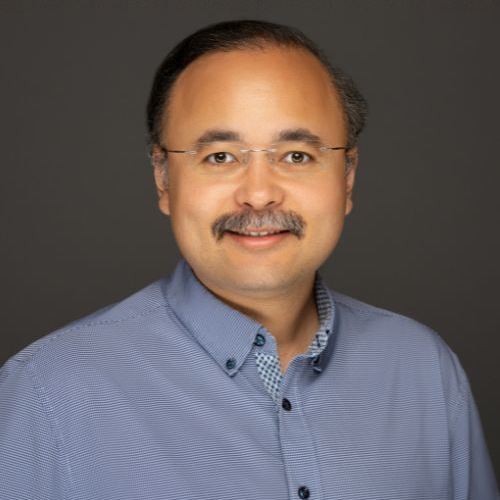
Yujan Shrestha, MD
Partner
I have led or supported FDA strategy and submissions for 51+ medical devices, most AI-enabled, since co-founding Innolitics in 2012, across 510(k), De Novo, Breakthrough, Q-Sub, and deficiency responses. My work spans radiology AI (CADe, CADx, CADt, quantitative imaging), cardiac and neuro imaging software, dental AI, LLM and foundation model devices, and I have managed or contributed to 65 Innolitics projects. FDA's public clearance letters for AI Metrics (K202229, 2020) and Medweb's Lightning Viewer (K242362, 2024) name me as the sponsor's correspondent. I presented at FDA's first Digital Health Advisory Committee meeting on generative AI in November 2024, I have published 78 articles on innolitics.com, and I built fda.innolitics.com, our public FDA device search tool.
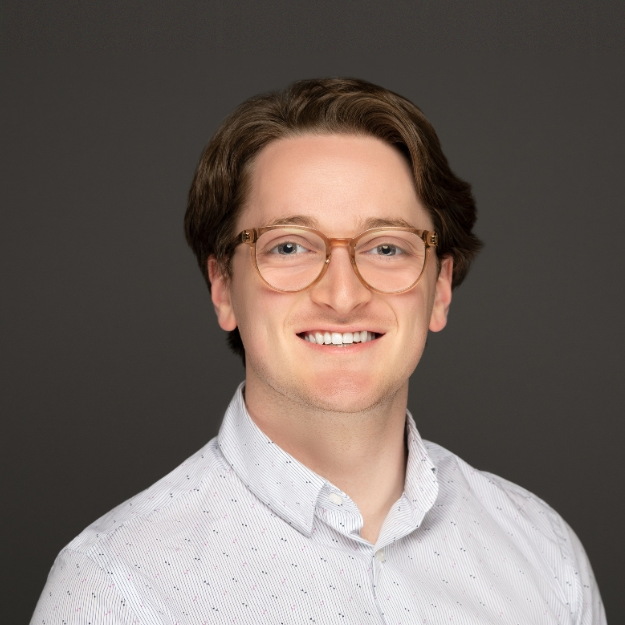
Cooper Molloy
Regulatory Affairs Specialist
Since joining Innolitics in November 2025, I have managed 13+ regulatory engagements across 510(k), De Novo, Breakthrough Device Designation, and Pre-Sub pathways, submitting 2 510(k)s and 5 Pre-Subs in 2026. Before joining Innolitics, I ran quality and regulatory for a neuromonitoring SaMD company, where I built an eQMS compliant with 21 CFR 820, ISO 13485, and IEC 62304, authored 35+ technical documents to support a class II SaMD regulatory submission, and led ISO 14971 risk management activities. I hold BS and MS degrees in Biomedical Engineering from Drexel University. Outside work, I play basketball and squash, and hunt down the best happy hour spots in any city I visit.

Meri Martinez
Senior Regulatory Affairs Specialist
I have led or supported 15+ FDA 510(k) clearances — primary correspondent on 8 — including a Special 510(k) cleared in 29 days and AI/ML-enabled SaMD for CT, MRI, and dental radiography. Since joining Innolitics in February 2023, I have project-managed 13 client engagements and personally led six clearances through FDA review: BodyCheck's CT Cardiomegaly (K232613), Radical Imaging's FlexView Diagnostic DICOM viewer (K233226), Smile Dx's dental CADe (K242437), GECHO contrast-echocardiography analysis software (K250120), Neosoma's brain-metastasis segmentation software (K252922), and AdvaHealth Solutions' AdvaView radiological image-processing software (K262449). I advise on complex strategies with little established precedent including generative AI (LLM and VLM) devices, Device versus Non-Device CDS determinations, non-device classifications, and premarket submission exemptions; for small and large, domestic and foreign, multidisciplinary teams; have drafted De Novo and Breakthrough Device submissions. I co-authored The Ultimate 510(k) Checklist on the Innolitics blog and hold a B.S. in Biomedical Engineering from UT San Antonio.
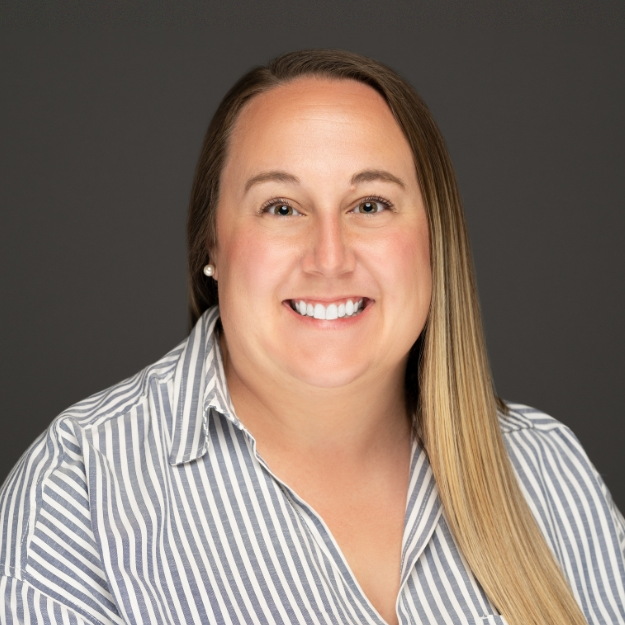
Mary Vater
Director of Regulatory Affairs
With 13 years in medical devices and more than 30 FDA 510(k) clearances, I have worked across implants, IVDs, surgical planning, instrumentation, wearables, and AI/ML SaMD. Notable SaMD clearances include K260811 Heartvue.Proton, K250959 BioticsAI, K250416 GBrain MRI, K230575 Limbus Contour, K220205 Ricoh 3D Anatomic Models, K212622 Zyter RPM, and K202151 Smart SPACE Shoulder System. As Director of Regulatory Affairs at Innolitics, I lead 510(k), De Novo, and Q-Submission strategy. I am also an ISO 13485 Lead Auditor and have developed and taught AAMI's courses on 510(k)s, De Novo, post-market surveillance, and lead auditing since 2019.
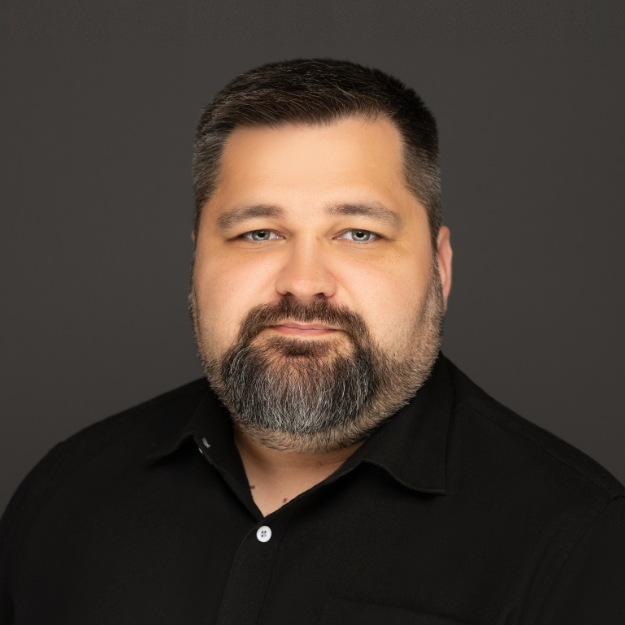
Ilya Spivakov
Senior Software Engineer II
Since 2025 I have supported 11 medical device cybersecurity engagements and 3 FDA submissions, two 510(k)s and one De Novo, with threat models, SBOMs, and penetration tests. Before that I spent 2 years maintaining the Varian Mobius 3D radiotherapy QA system and 10 years at an aerospace firm, including DO-178C software for an FAA-certified helicopter cockpit instrument. My deliverables follow the FDA premarket cybersecurity guidance, ANSI/AAMI SW96, and AAMI TIR57: threat models, security risk assessments, SBOMs, and penetration tests of web, mobile, and firmware attack surfaces.
Celebrating the Win
Innolitics is writing and sponsoring a joint press release with Deep Reasoning AI to announce the clearance.
When you share your story with us in a case study like this one, Innolitics sponsors and coordinates a joint press release celebrating your success.
About Deep Reasoning AI
- Deep Reasoning AI, based in Sarasota, Florida, builds patient-specific 3D anatomical models from CT, X-ray and MRI scans. Its leadership includes Cornell University professors Bart Selman, PhD (Chairman) and Carla P. Gomes, PhD (CTO). Mayo Clinic is a collaborator and shareholder.
- NeuroDR was developed in collaboration with 3DR Labs of Louisville, Kentucky, which provides 3D imaging post-processing and AI imaging services to hospitals nationwide.