An FDA-ready quality system in 2 months. Guaranteed to pass your first audit.

We stand up a QMS built for software teams, not for paperwork, and we run it with you afterwards. Audit-ready from the day you ship.

to an audit-ready quality system
2 months to an audit-ready quality system
your first audit, while we maintain it
Passes your first audit, while we maintain it

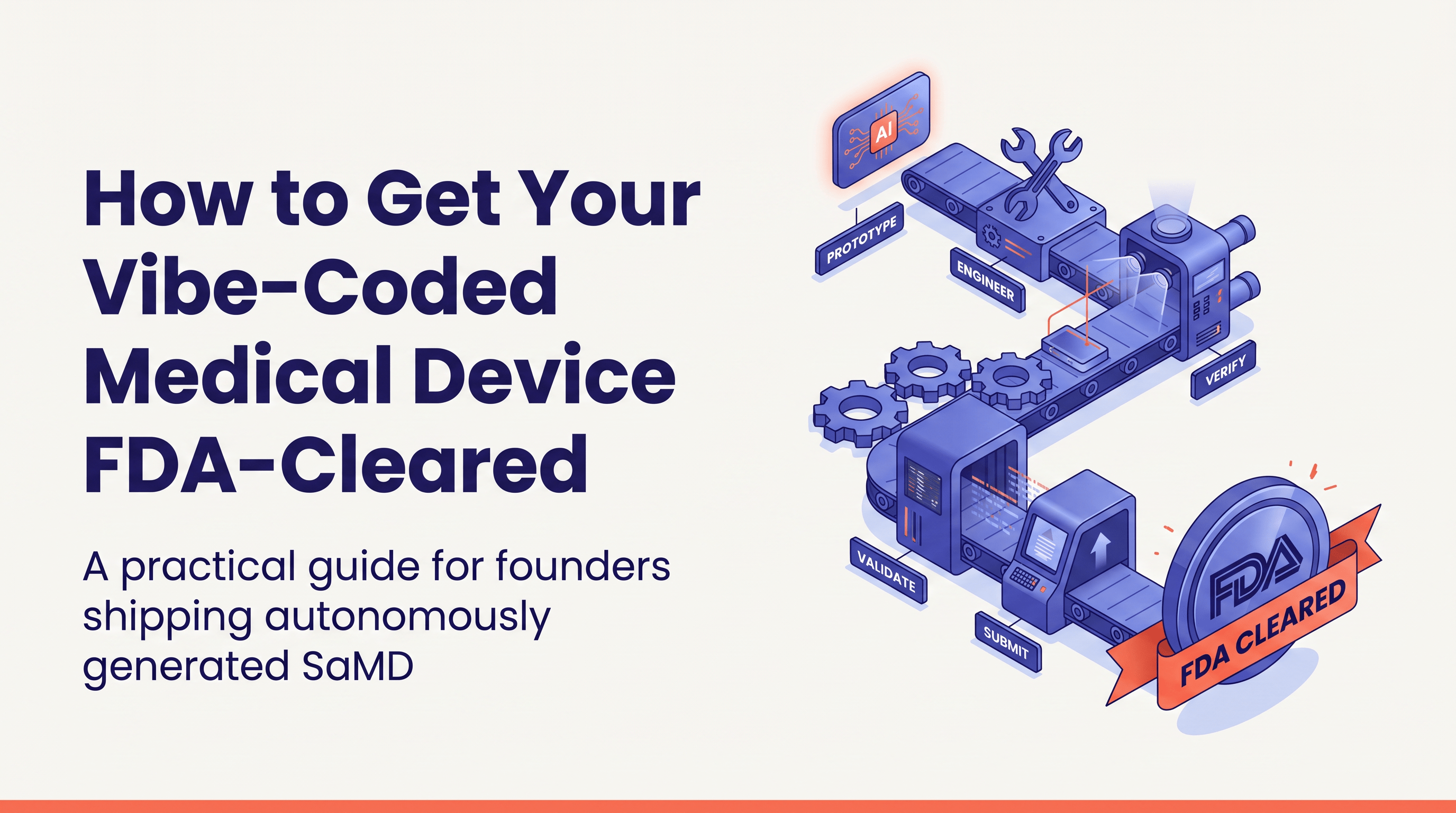
We Submitted a 510(k) in 7 Weeks and Cleared it in 4 Months

Completed DHF and 510(k) documentation in 7 weeks. FDA cleared 4 months after submission."

Medweb logo

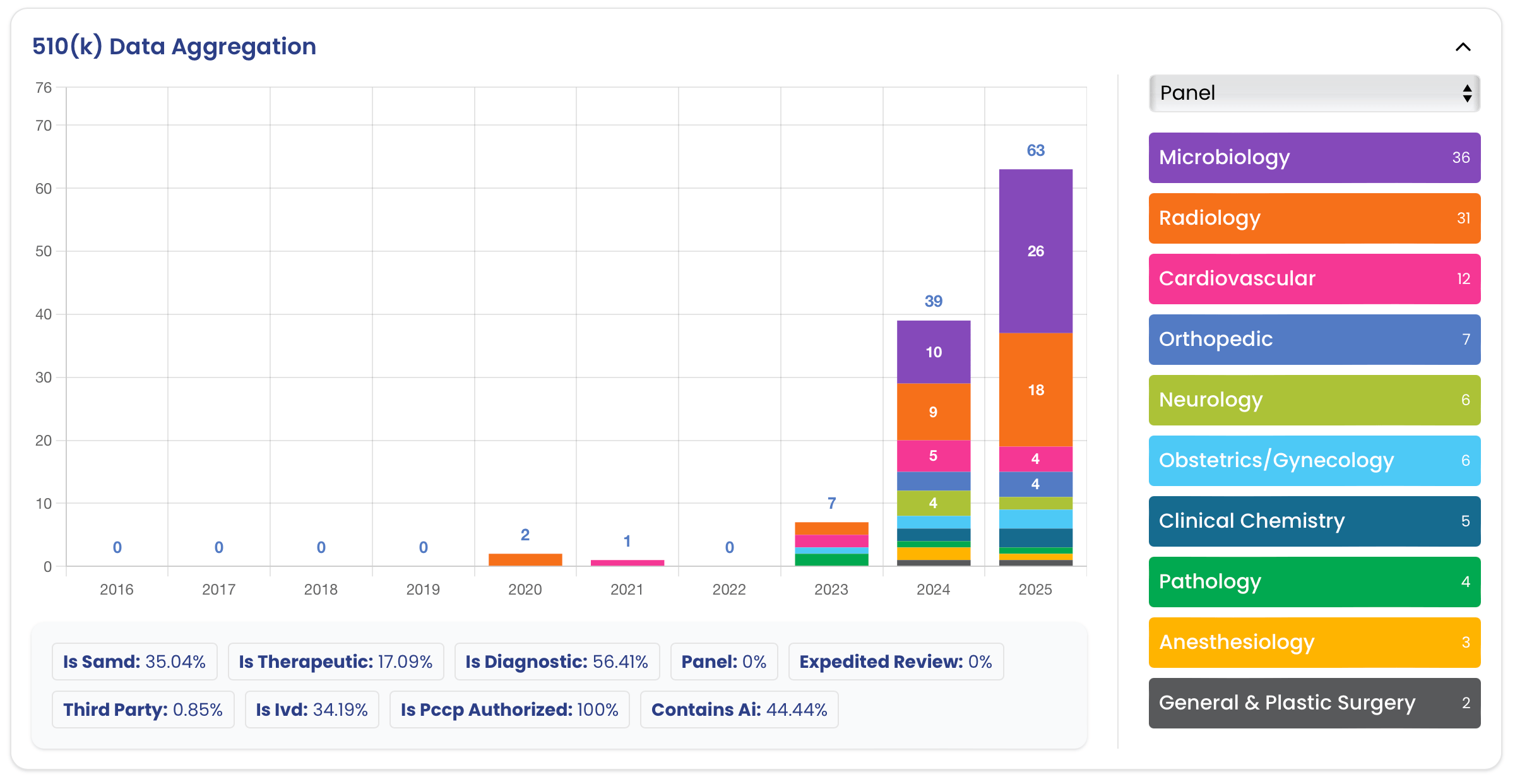
CADt from Concept to FDA Clearance in 9 Months

Fast 510(k) cleared vascular AI CADt in 9 months after stalled strategy, with only two FDA deficiencies.

GuideAI Health logo

We Got a Cardiac MRI Analysis AI SaMD Cleared in 5.5 Months, PCCP Included

First submission, first clearance: multi-model cardiac MRI AI cleared in 5.5 months with an FDA-authorized PCCP.

Heartvue.ai - Dr. Jeffrey Dendy logo

Recent FDA submissions

Our Clients Include

  • nvidia
  • University of Alabama
  • Mary Bird Perkins
  • PhotoniCare
  • Butterfly Network
  • Enlitic
  • OXOS
  • NSI
  • Prenuvo
  • Transonic
  • AI Metrics
  • RadUnity
  • Varian-Mobius
  • Echo IQ
  • Envisionit
  • Smile Dx
  • Indica Labs
  • Magnetic Insight
  • Neosoma
  • BodyCheck

Is this for you?

A quality system your engineers will actually use.

Exiting R&D

Your design decisions have started to matter.

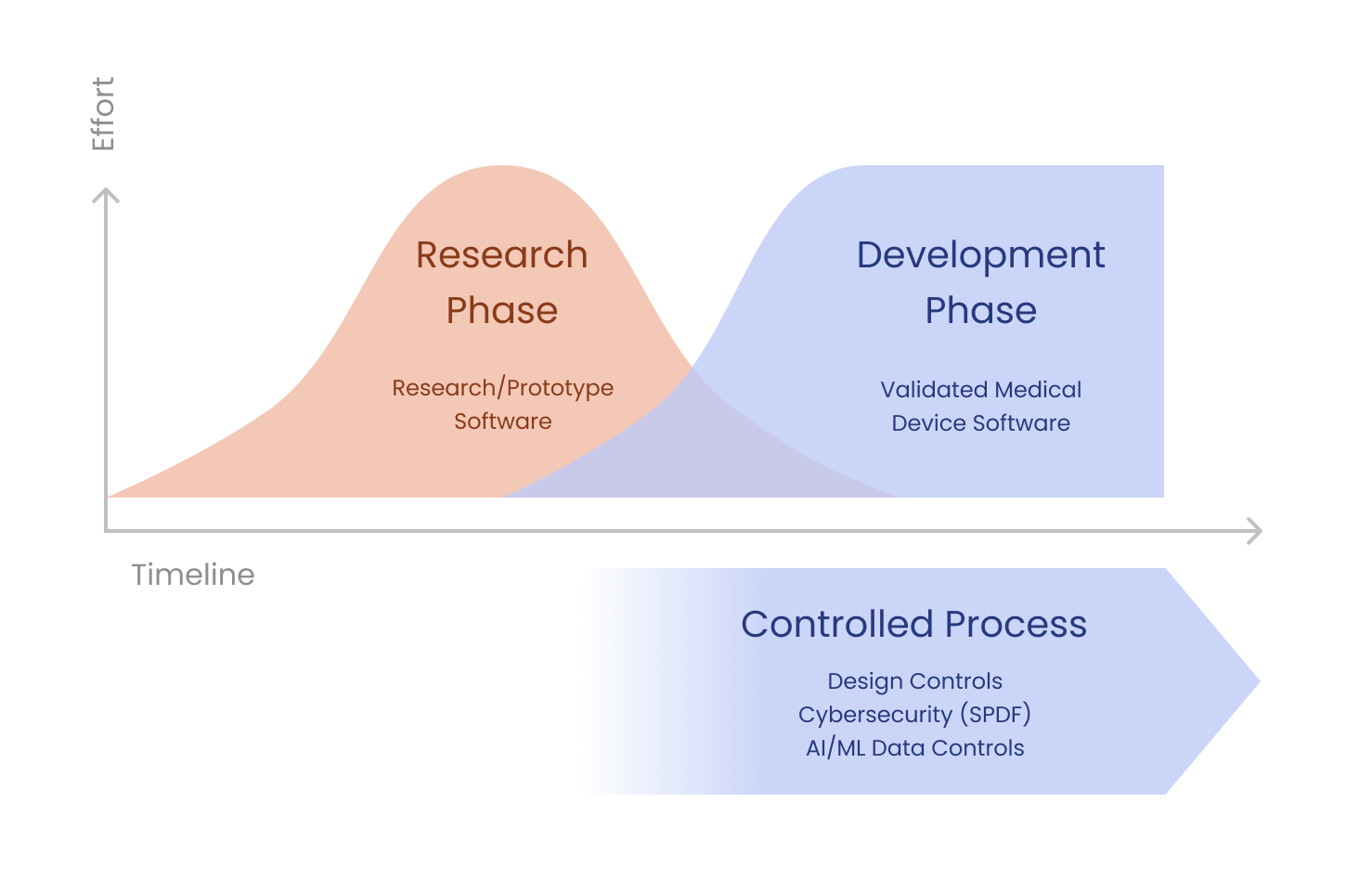
The trigger is rarely the submission. It is the moment you stop exploring and start making choices somebody will later ask you to justify. The design history file has to begin here, and retrofitting it later costs far more than starting it now.

Hardware QMS, software team

You have a quality system, and your software team works outside it.

One client described getting quality records out of their engineers as pulling blood from a stone. A QMS written for manufacturing does not fit a team that ships weekly. We build the software half so it fits how your engineers already work.

A system nobody can run

You want it to survive us leaving.

Procedures written to satisfy an auditor and nothing else get ignored by week three. We write them to match how your company actually operates, train your team, and either hand over or stay on. Both are real options and we will tell you which fits.

Proof, not promises

Teams we got through FDA.

Software and AI-enabled devices where we owned the documentation and served as regulatory correspondent.

Tell us where your quality system stands and we will tell you the gap.

What exists today, what pathway you are on, and when you plan to ship. We will tell you whether two months is realistic and what would stop it.

Get a QMS scope →

The core differentiation

Most quality systems fail because nobody uses them.

A QMS that satisfies an auditor and nothing else gets worked around by week three, and then you have two problems: a system nobody follows and records that do not match reality. That is what an investigator finds.

What moves our timeline is almost never the regulation. It is fitting the procedures to how your company already works. We have supported more than 60 FDA submissions, so we know which parts a reviewer will stop on and which parts you are free to shape around your team.

We needed to start documenting design decisions as we exited R&D. Innolitics stood up the system in Notion, and it is the first quality process our engineers have not routed around.
Paraphrased from a client discovery call

What you get

A working quality system, not a folder of templates.

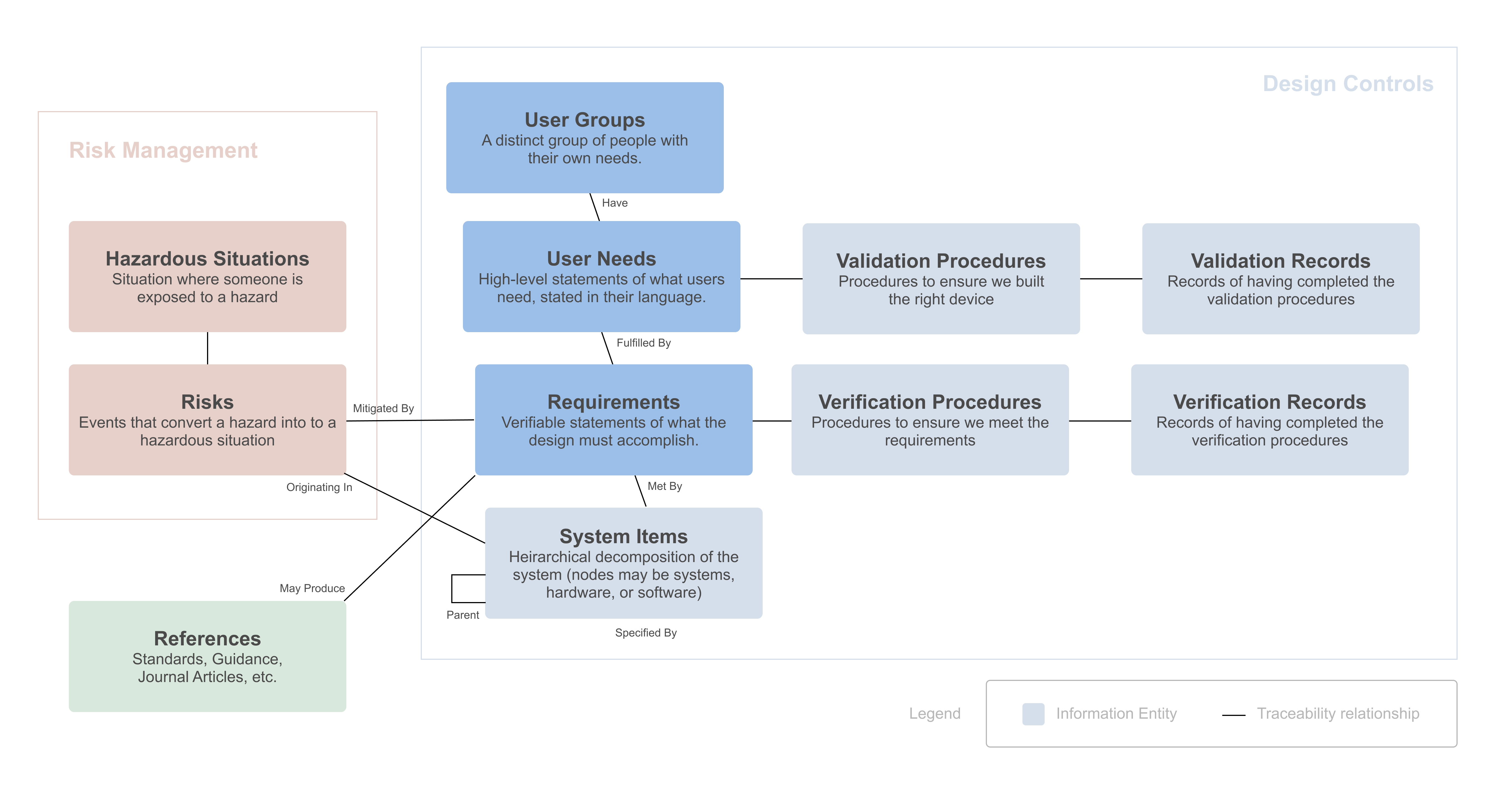
Procedures written for your company, the platform they live in, the records already started, and your team trained to run them.

Scope and Implementation Plan

Which regulations apply, which procedures you need first, and the order we build them in. Two weeks, and it is what makes the rest predictable.

Quality Manual and Procedures

Design and development, risk management, cybersecurity, document control, training, and supplier control first, because those gate your submission. Post-market procedures follow.

Medtech OS, Set Up and Validated

Your eQMS running on Notion with our compliance layer: electronic signatures, Part 11, SBOM handling, and tool validation with test cases and documentation.

The Records, Actually Started

Document change orders, training matrix, approved supplier list, the design history file. An empty system passes nothing, so we start the records with you.

Registration and Listing

FDA establishment registration, device listing, UDI, and GUDID. The administrative work that blocks shipping and that nobody budgets time for.

Your First Audit and Management Review

We run the first internal audit and the first management review inside your first year, which is both a regulatory requirement and the best rehearsal you will get.

Inspection Readiness

A readiness report for an FDA inspection. Registered firms can be inspected on about a week’s notice, so being ready is not a project you start when the letter arrives.

Training and Handover

We train your team to run it. You can take it from there, or keep us on to maintain it. The audit guarantee applies while we are the ones running it.

How the two months run

Four phases, two months, one working system.

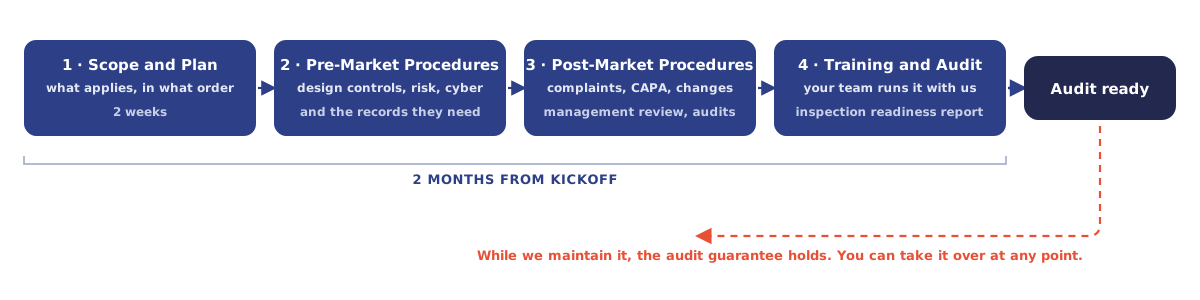
Pre-market procedures first, so your design file can start immediately. Post-market procedures, training and the first internal audit follow.

QMS implementation process. Phase 1, scope and plan, two weeks, establishing what applies and in what order. Phase 2, the pre-market procedures covering design controls, risk and cybersecurity and the records they need. Phase 3, the post-market procedures covering complaints, CAPA and change control, with management review and internal audits. Phase 4, training and the first audit, where your team runs the system with us and we write the inspection readiness report. The result is an audit-ready quality system, two months from kickoff.

Pre-market QMS work and design history file preparation run concurrently. Neither waits on a submission, and neither waits on FDA.

Which situation looks like yours?

Six quality problems we are asked to solve.

Most engagements are one of these. If yours is not on the list, it is still worth a call.

Greenfield

We have nothing and we need a QMS

The packaged engagement. Scope and plan, then the pre-market procedures that gate your submission, then the post-market half. Two months to a system you can be inspected against.

Software gap

Our QMS was written for hardware

Your manufacturing procedures do not describe how software gets built, and your engineers work outside them. We build the software half, map it to what you already have, and avoid standing up a second parallel system.

No AI procedures

Nothing covers our AI/ML work

Model training, data provenance, acceptance criteria for third-party algorithms, and change control for retraining. These are the procedures most quality systems are missing, and the ones an AI-focused investigator asks for.

Carve out

One product needs a QMS, the rest does not

Drawing the boundary so the regulated product sits under design controls and the rest of the platform stays free to ship weekly. Decided early this is cheap, and it keeps the unregulated side fast.

Gap first

We think we are compliant and want to be sure

A gap assessment runs about one to two weeks and tells you what is actually missing. Remediation is usually about six weeks after that. We would rather scope from findings than from a guess.

Audit soon

An inspection or a partner audit is coming

Registered firms can be inspected on about a week's notice. We triage what matters before the visit, run a mock audit, and write the readiness report. This is the one engagement where we work backwards from a date.

Fixed fee. One guarantee. One team.

A quality system that is ready before you are.

Pre-market first so your design file can start, post-market after the submission goes in. We write the procedures, train your team, and stay on if you want the guarantee to stay on.

Scope my QMS →

Before you book the call

The questions we actually get asked, in order.

When do we actually need a QMS?

Later than most people assume, and the answer depends on your pathway.

For a 510(k), the quality system is not required until you sell the device. You can submit without it. Teams routinely stand up the QMS after the submission goes in, while FDA is reviewing.

For a De Novo, it should be running during the review. Scrutiny is higher, post-market expectations are heavier, and FDA can audit during the review. It is rare, but it happens.

The other trigger has nothing to do with FDA. The day you stop exploring and start making design decisions somebody will later ask you to justify, your design history file needs to exist. That is usually earlier than either of the dates above.

What does the guarantee cover, and what voids it?

We guarantee your quality system passes its first audit.

The condition: it applies while we are the ones maintaining the QMS. If we implement it and your team takes it over, the guarantee ends with the handover. A quality system is only as good as the records being kept in it, and once we are not the ones keeping them we have no control over whether it is being run properly.

You can absolutely take it over. Plenty of clients do, and we train your team for exactly that. Just know that the guarantee goes with the maintenance.

What does it cost, and what drives it?

A fixed fee, paid at key milestones, quoted once we know what exists today.

It is the same for a 510(k) or a De Novo. A PMA costs more, because the quality system carries heavier obligations and more scrutiny.

What moves it is the starting point. Greenfield is the most predictable. An existing system is scoped from a gap assessment rather than a guess, because we would rather quote from findings. Be aware that existing documentation rarely transfers directly, so having procedures already written does not usually reduce the price much.

Separate from our fee: your own Notion licences, and any hourly or retained quality support after the implementation.

Do we have to use Medtech OS?

Yes. Our team is trained on Medtech OS, and that is a large part of how we hit the timeline.

There are plenty of other good quality management and eQMS tools out there. We do not support them.

Medtech OS runs on Notion, so you will need Notion licences for the people using it. That cost is yours rather than ours.

Who runs it after you build it?

Your choice, and we will be straight about the trade.

We can train your RAQA team and phase out, which is what we do when you have quality staff already. Or we can keep running it, which is what we do when you do not want to hire for it yet.

The audit guarantee applies while we are maintaining it. If you take it over, you get the system and the training, and the guarantee ends there.

Does this come with the full set of templates?

Yes. Every procedure, work instruction and record template you need is included, and we customise them to your company rather than handing over a generic pack.

You are not supplying the content. That is the expensive part of standing up a quality system, and it is the part we bring.

Does it cover the cybersecurity documents FDA requires?

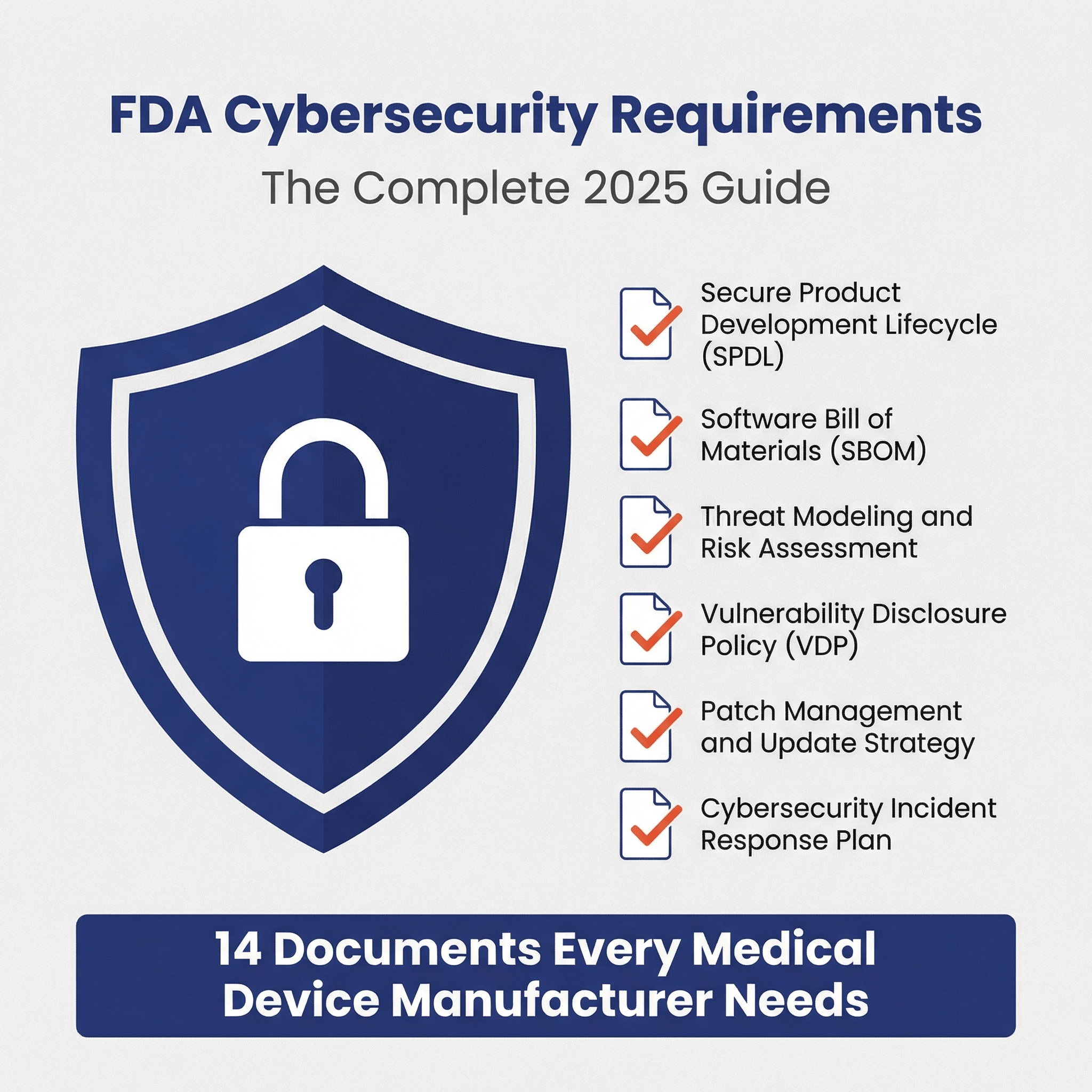
Yes. Templates for the full set of cybersecurity documentation needed for a submission are included: the cybersecurity management plan, threat model, security risk assessment, SBOM and its support documentation, and the testing and metrics reports.

This is the package FDA now refuses submissions without, so it is part of the quality system rather than something you assemble separately later.

Do your templates cover AI/ML-specific procedures?

Yes. Data provenance, model training and validation, acceptance criteria for algorithms you did not build, and change control for retraining are all covered.

Most quality systems do not have these, which is why we built them in. If you have a PCCP, the quality system has to be able to execute it: a plan FDA authorized and a company that cannot follow it is a worse position than not having one.

Does our submission work feed the QMS, or is it duplicated effort?

It feeds it directly. The product development plan, the cybersecurity management plan, and the risk management file written for a submission become the starting point for your internal procedures.

If we are doing both, you are not paying twice for the same thinking. If somebody else did your submission, we will use what they produced.

What happens if FDA shows up?

If you are registered with products listed, an investigator can arrive on roughly a week’s notice, and that is a different part of FDA from the people reviewing your submission.

Inspection readiness is a deliverable here, not an afterthought: a readiness report, the first internal audit, and the first management review. The audit is the rehearsal.

What are the ongoing costs of using Medtech OS?

Two things, both recurring.

Medtech OS is a subscription, billed quarterly, which covers support for the platform and keeps the compliance layer maintained. It does not cover customising the system to new business needs; that is quoted separately.

Notion licences are paid by you directly to Notion, per user, for everyone who needs access. We cover the Notion cost during the implementation itself.

Optional on top of both: retained or hourly quality support after the implementation. That is also what carries the audit guarantee.

Do we need a gap assessment first?

No. This service sets up a new quality management system, not an assessment of one you already have.

If you do have an existing QMS and you want it assessed, we are happy to do that. It is a separate piece of work, and we would scope it on its own terms.

Do you do ISO 13485 or MDSAP?

We build to the Quality Management System Regulation, 21 CFR Part 820. Since February 2026 the QMSR incorporates ISO 13485:2016 by reference, so the requirements we build to are ISO 13485.

Certification is a separate matter. FDA does not require a certificate of conformance to ISO 13485, does not issue one, and a certificate does not exempt you from an FDA inspection. What we build is a sound foundation if you later pursue certification through a registrar, but we do not lead certification or MDSAP engagements, and we will say so on the call rather than after you sign.

Our product might be Class I exempt. Do we still need a QMS?

Often yes. Exempt from premarket review is not the same as exempt from the quality management system regulation, and the exemptions that do apply are narrower than people expect.

It is worth getting the listing strategy right before you register, because registering products you did not need to register pulls you into obligations you could have avoided.

When is Innolitics the wrong firm?

When ISO 13485 certification or MDSAP is the real goal rather than FDA compliance.

When you want a platform licence and nothing else. We are not an eQMS vendor, and if all you need is software there are cheaper ways to buy it.

When the device is hardware-first and the software is incidental. Our quality work is built around software lifecycle, and a manufacturing-heavy system is not where we add the most value.

30 minutes. No deck.

Book the scoping call.

We will tell you when you actually need a QMS, what the gap is, and whether you need us at all. If a gap assessment is the right first step, we will say so.

Book the scoping call →

What people read before booking

We publish our thinking.

The same reasoning that goes into a quality system, written up in public.

Need something else?

See our other services.

Regulatory strategy and FDA Pre-Sub, concept to cleared device, AI/ML submissions, and FDA cybersecurity, each sold on its own.

Browse services →

Let's Talk

Every great partnership starts with a conversation. Fill out the form below for a discovery call, and an Innolitics team member will contact you soon.