






Rx-to-OTC switch with a software gate
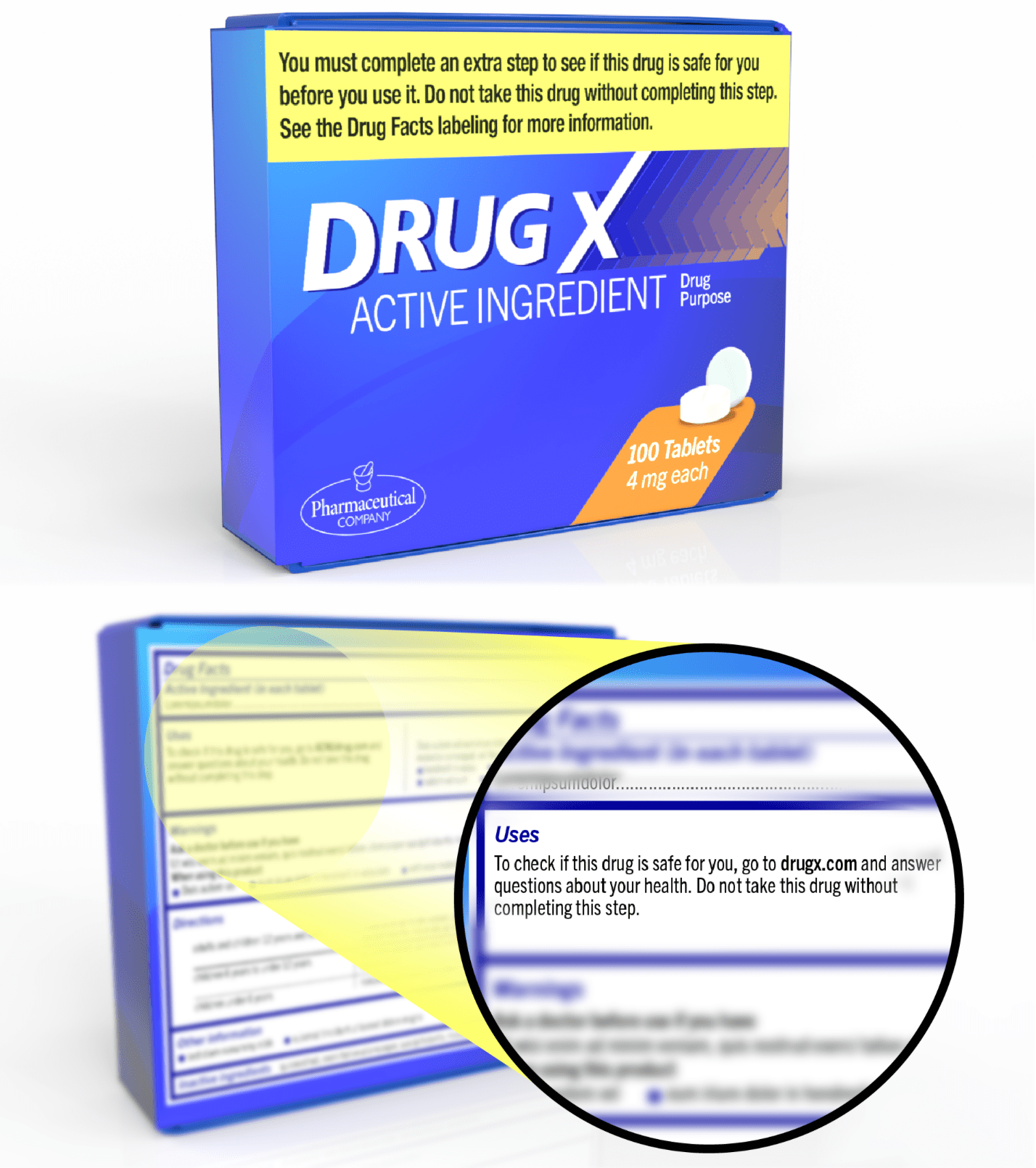
Unlocks: The FDA-cleared gating software that makes an Additional Condition for Nonprescription Use possible: self-screening, eligibility logic, labeling integration.
Pharma × FDA-regulated software
ACNU, companion diagnostic, imaging endpoint, clinical AI agent. If your asset needs software the FDA has to review, we’ve cleared it before. Petros Pharmaceuticals picked us in May. 45 prior submissions are on the record.
Featured in BioSpace
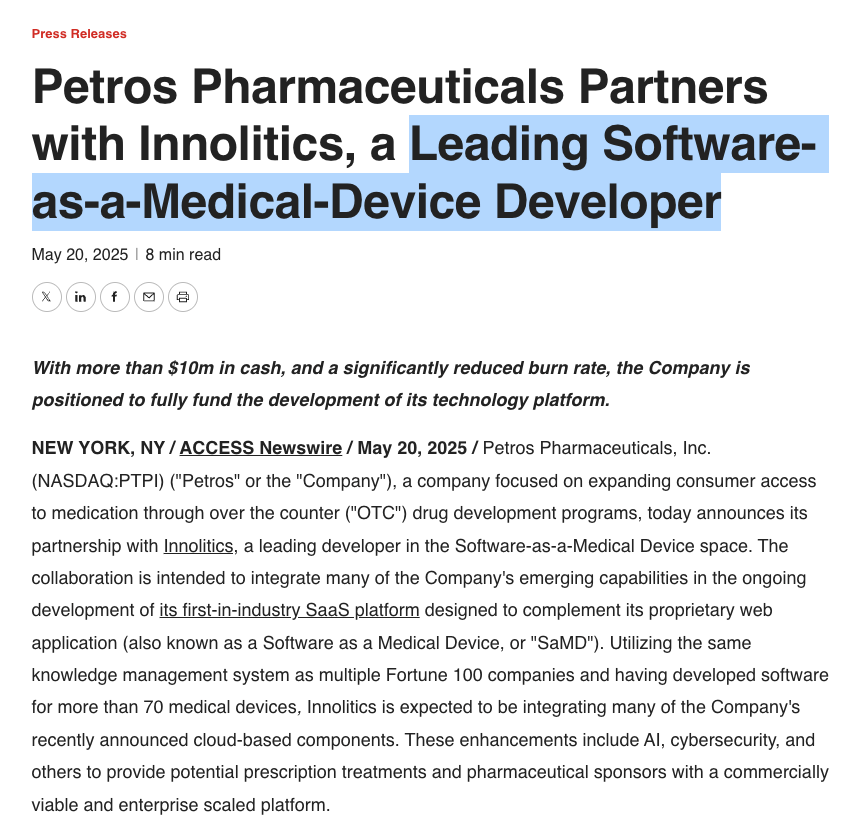
BioSpace announced the partnership on May 20, 2025: Petros Pharmaceuticals (NASDAQ: PTPI) partnered with Innolitics to integrate AI, cybersecurity, patient self-selection, EHR integration, and retail pharmacy components into its first-in-industry SaaS platform, developed as Software as a Medical Device under FDA’s ACNU guidelines for Rx-to-OTC switch.
Pharma teams bring us in once the build-vs-buy call is settled and the next question is partner fit: credentials, regulatory record, execution risk. We’ve shipped 45+ FDA submissions across AI/ML, imaging, IVD, and digital therapeutics. The hard reviews included. The ones other firms said no to.
Your turn
30 minutes. FDA path, scope, timeline, and whether we’re the right fit for your program.
Proof, not promises
FDA clearances, Breakthrough Device Designations, hold letters recovered, multi-indication submission architectures. AI/ML, imaging, clinical AI.
Voice of the customer
The lines they repeat on reference calls.
I needed a software development partner to write the software, train the AI, and get FDA clearance. An investor once told me that it would take me $5 million and 5 years to get to where we are now. Innolitics got me here 3 years ahead of schedule and $4 million dollars under budget.
Our first FDA clearance was monolithic — every component submitted as one device. When we needed to clear a second AI indication, we assumed we'd have to re-submit the entire platform. Innolitics saw something we didn't: a modular regulatory architecture that isolated the new CNN as the only component under review. That single insight saved us months of redundant documentation and positioned every future tumor type as a lightweight module swap. We submitted in September 2025 and cleared in December — 3-month review, zero major deficiencies. I've worked with regulatory consultants before. Innolitics is the first one that understood our software well enough to design a regulatory strategy from the architecture itself.
We likely wouldn't have received our Breakthrough Device Designation without Innolitics. When FDA initially pushed back, they quickly understood the concerns and responded with clear, well-supported data. Their expertise in software, medicine, and FDA's AI/ML expectations made a decisive difference in the outcome.
After spending $500K over five years on consultants who knew how to sell but couldn't execute, Innolitics took us from concept to FDA clearance in under 18 months for a first-of-its-kind MRI neuroimaging device. When FDA questioned our original approach, they adapted without losing momentum. We submitted on schedule and cleared in 4.5 months. I've seen many engineers at J&J and Ethicon — Innolitics is many standard deviations ahead of the curve.
They were proactive, informative, and very well-versed in the regulatory challenges of AI in medical imaging… Unlike competitors, who sometimes take a blanket approach, Innolitics didn't throw the baby out with the bathwater. They recognized the good work already done and built upon it… We reviewed other capable firms, but none showed the same depth of understanding of the rapidly evolving landscape of AI and regulatory requirements. Their proactive stance with the FDA gave us confidence that we were in the right hands, compared to competitors who seemed more reactive.
We recently got FDA cleared and Innolitics' responses were absolutely clutch to craft the strategy that finally worked. Unlike other consultants, who wanted us to do more work and spend more money on clinical testing, Innolitics found a path of least resistance using a combination of our existing validation and thoughtful responses to FDA. We received the best Christmas present ever – our 510(k) clearance letter.
Where our medical device software experience applies to pharma
If you already know which one you need, you’re in the right place. If you’re between two, we’ll tell you which fits in the first call.
Unlocks: The FDA-cleared gating software that makes an Additional Condition for Nonprescription Use possible: self-screening, eligibility logic, labeling integration.
Unlocks: Build the companion diagnostic paired with your asset instead of renting it.
Unlocks: Better enrollment, fewer screen failures, audit-ready from patient one. AI imaging software that pre-screens patients against your trial's eligibility criteria, run against real-world scans, validated against the protocol, audit-ready for the IND.
Unlocks: FDA-qualified imaging endpoints, biomarker assay software, and clinical outcome assessment tools. Qualify once, reference in every IND, NDA, and BLA without re-review.
Unlocks: Qualify a software tool with FDA once, then reuse it across multiple submissions, yours or a partner's.
Unlocks: Deploy LLM and agent systems in regulated workflows (clinical ops, pharmacovigilance, medical affairs) in a form your quality system and FDA will accept.
How we engage
Same team, same quality system, same FDA reviewers, whether we carry the whole build or wrap the work your team already did.
Option A
We design, build, validate, and submit. Engineering, regulatory, AI/ML, and cybersecurity under one roof. No vendor handoffs, no translation layer between the people writing the code and the people writing the submission.
Best for: Pharma teams without internal SaMD engineering, or programs where speed to submission matters more than who owns the code day-to-day.

Option B
Your team has the software or the model. We wrap it in the FDA-grade lifecycle (design controls, V&V, cybersecurity documentation, human factors, PCCP) so it can be referenced in an NDA supplement, a De Novo, a 510(k), or a DDT qualification package.
Best for: Teams whose discovery, clinical science, or in-house software is already working and FDA-ready is the missing layer.
Partner fit, fast
Straight talk in 30 minutes: scope, timeline, team, references. No deck theater.
Before you book the call
Your model stays yours. We wrap it in the FDA-grade lifecycle (IEC 62304, V&V, cybersecurity, PCCP). You own the weights, the code, the training data provenance. We author the regulated-software shell around it.
Yes. A four-week fixed-fee Regulatory Gap Analysis returns a scored readiness report, pathway recommendation, and remediation roadmap. Most pharma programs start there before committing to a build.
Either. We deliver containerized artifacts and infrastructure-as-code. Most pharma clients host production themselves once we hand off. Staging and V&V can run on either side.
Both. Discovery and gap analyses are fixed fee. Builds are typically milestone-based fixed-fee for scoped workstreams, T&M for evolving scope. We surface the tradeoff before you sign.
Everything. Source code, design history file, V&V protocols and reports, traceability matrices, submission artifacts, cybersecurity package, post-market plan. Your regulatory team owns the asset from day one.
CROs run drug trials; we run regulated software. Different FDA centers, different artifacts. We map to their deliverables, attend their meetings when software touches endpoints, and stay out of their lane otherwise.
We do both. Some pharma teams want us in the pre-sub room as the software voice. Others want us prepping their regulatory lead and staying in the background. Decided per meeting.
Depth if you want it
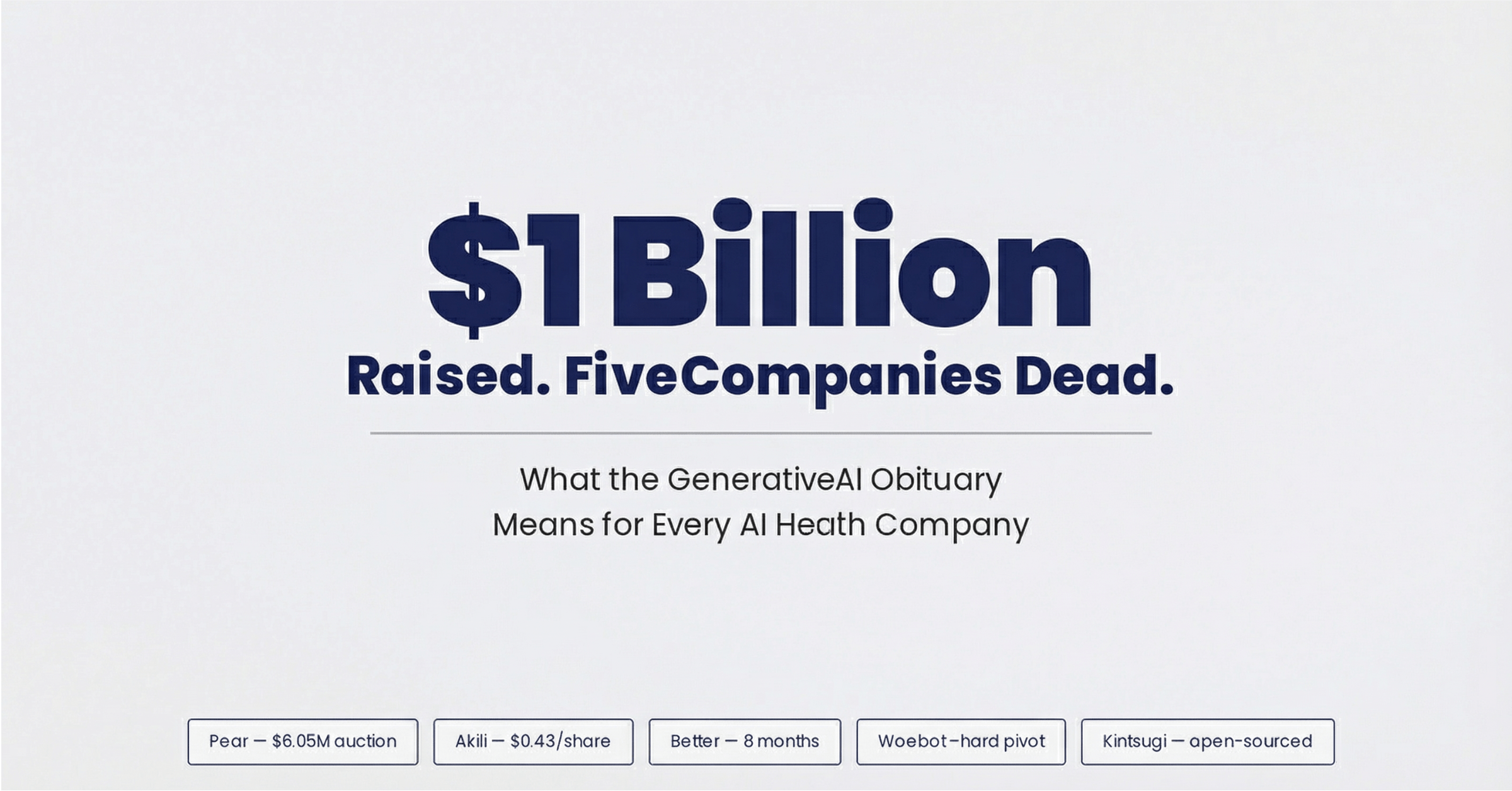
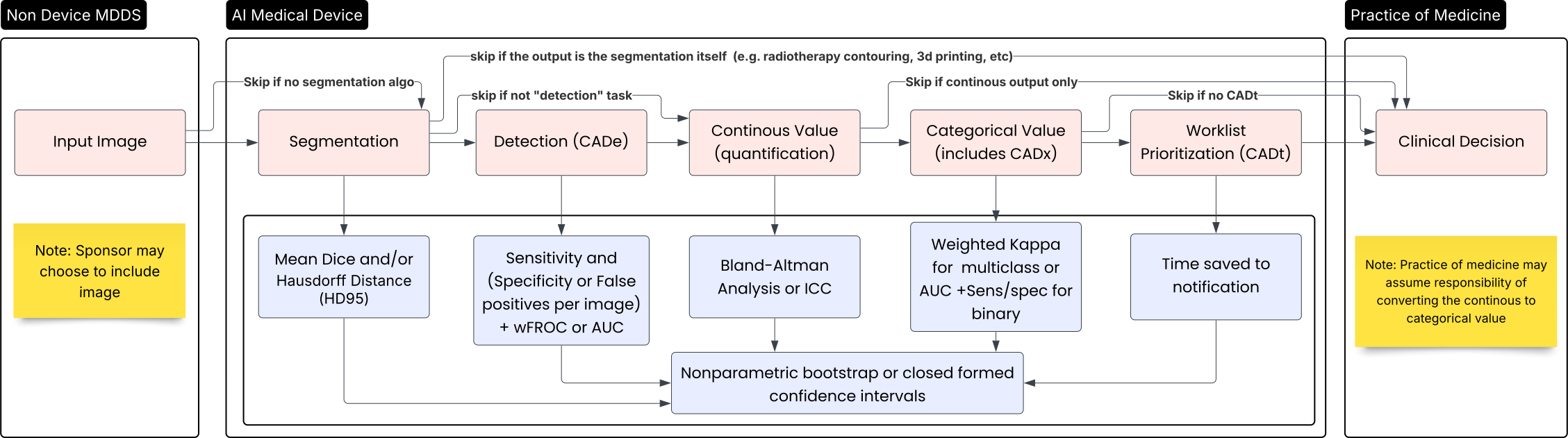
Recent Innolitics editorial on the FDA’s new ACNU pathway, the cautionary balance sheet behind the last wave of digital therapeutics, and the validation benchmarks FDA actually approves for AI/ML.
An FAQ regarding the FDA's new ACNU Rule.
Read more →
Why digital health companies keep dying before and after FDA authorization, the evidence-reimbursement trap strangling the sector, and a post-marke...
Read more →Setting acceptance criteria incorrectly (too high or too low) can delay your FDA submission by weeks or trigger rejection. This guide analyzed 784 ...
Read more →Ready to move
You’ll talk to someone who has cleared this class of software before, in this FDA center, on deadlines that mattered.
Every great partnership starts with a conversation. Fill out the form below for a discovery call, and an Innolitics team member will contact you soon.