
The regulatory lead writes the Pre-Submission: intended use, device description, algorithm description, the proposed performance study, and a short list of specific questions. Endpoints and acceptance criteria are set with the biostatistician. The lead runs the FDA meeting and files minutes within 15 days that record what was agreed.
On the map: Pre-sub package. Performance protocol and endpoints with the biostatistician. Lead the FDA meeting.
Rows are disciplines, columns are stages 1 to 8. Select a square to open that task.
Back to the full map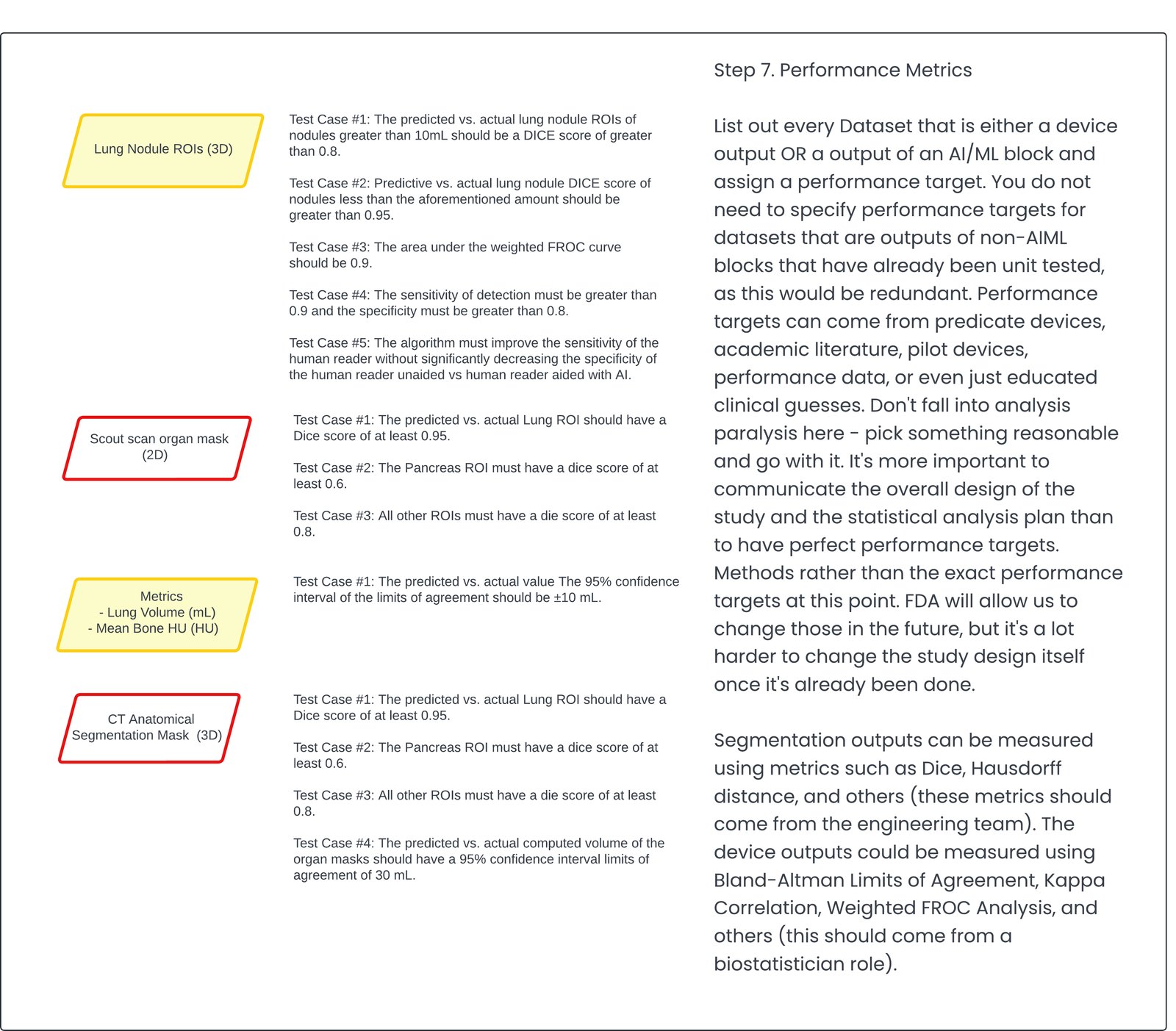
Draft the pre-sub questions with clinical and engineering, aimed at the study and algorithm choices the team is least sure of. FDA's written feedback then shapes the protocol.
Keep to the few questions that remove the largest regulatory or clinical risk, such as pathway, predicate, reference standard and sample size. Write each so FDA can agree or disagree with a stated approach.
Enough for the reviewer to follow inputs, each model and each processing step to the outputs. FDA cannot judge the burden of proof for an algorithm it does not understand, and vague descriptions produce non-committal answers.
Give each device output and each AI block a performance target, using the predicate, literature or pilot data. The study design matters more than the exact numbers at this stage, because targets are easier to revise than the design.
Put the agreements at the top, organized by question, with no new information. FDA reviewers read the minutes later, so each agreed point should be written plainly enough to hold.
See the open positions and apply.