
The regulatory lead turns the product idea into a written plan. It names the intended use, the classification regulation and product code, the candidate predicates, and the submission type. It also lists the regulatory questions that are still open and which of them are worth a Pre-Submission.
On the map: Regulatory plan. Pathway, product code, predicates. 510(k) or De Novo call. Scope intended use.
Rows are disciplines, columns are stages 1 to 8. Select a square to open that task.
Back to the full map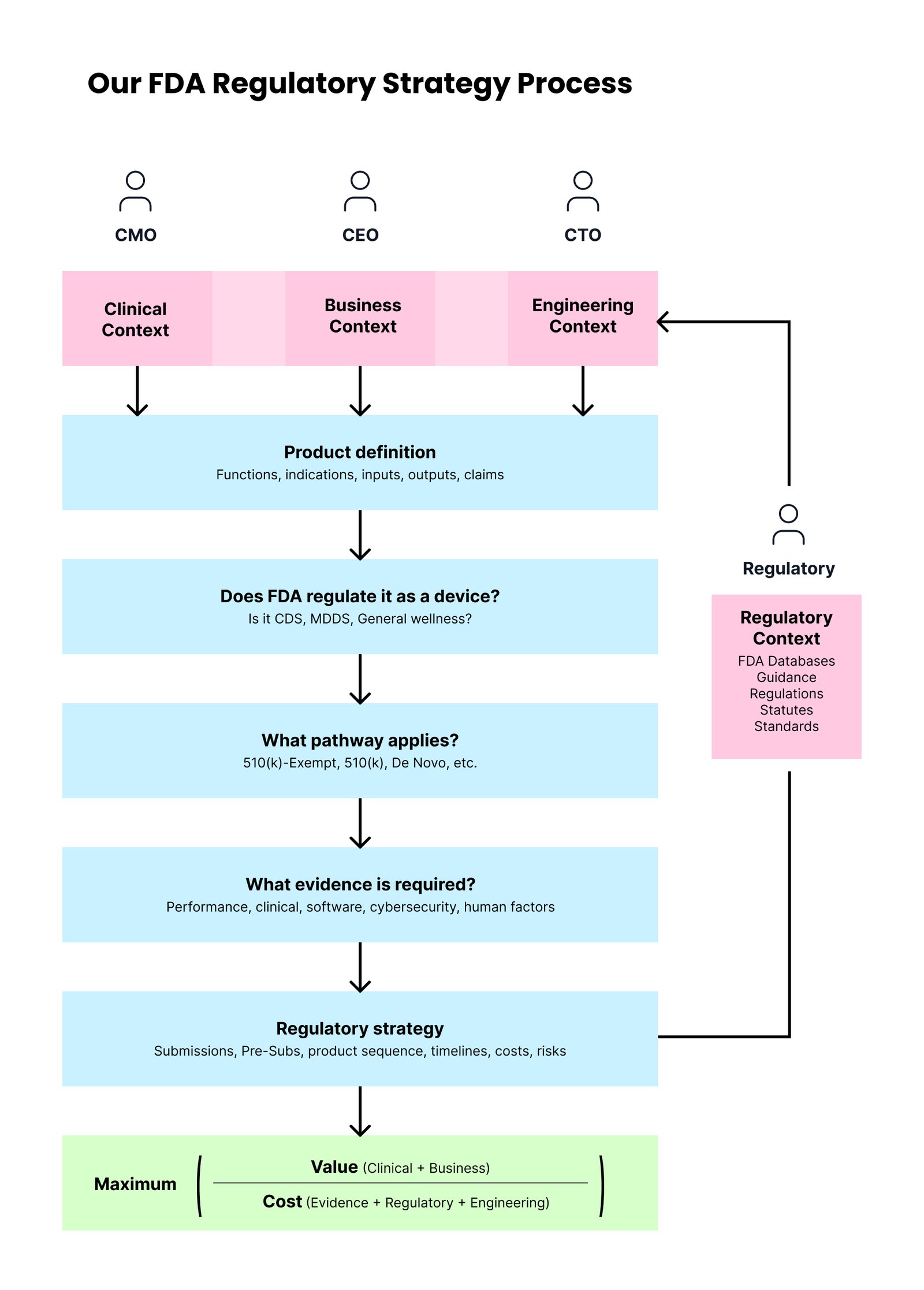
Test the intended use and predicate with engineering and clinical before locking the plan. A claim the software cannot support, or the study cannot power, costs months later.
List every function the model can perform, then pick the one a buyer will pay for, the evidence can support, and a predicate can cover. Deferred functions are disabled in the release and kept out of the labeling.
Search cleared and granted devices for the same intended use. If a device with the same claim type exists in any anatomy or modality, there is a 510(k) argument. If the claim type has no precedent, plan for De Novo and its special controls.
Read the classification regulations and the decision summaries of the closest devices. Choose the code whose predicate pool and special controls fit the claim, and check that the code and the intended use tell the same story.
Rate each open question by how likely FDA is to disagree and what it would cost to be wrong. Ask FDA only the questions whose answer would change the study, the predicate, or the claim.
See the open positions and apply.