
After clearance the manufacturer registers its establishment, lists the device, and issues a unique device identifier for each software build. Quality then runs the routine processes FDA inspects: complaint files, medical device reporting, CAPA, change assessment for each release, internal audits and management review. These processes produce the evidence that the cleared device is still the one being shipped and that field problems are found and acted on.
On the map: Registration, listing, UDI. Complaints, CAPA, MDR reporting. Internal audit, management review.
Rows are disciplines, columns are stages 1 to 8. Select a square to open that task.
Back to the full map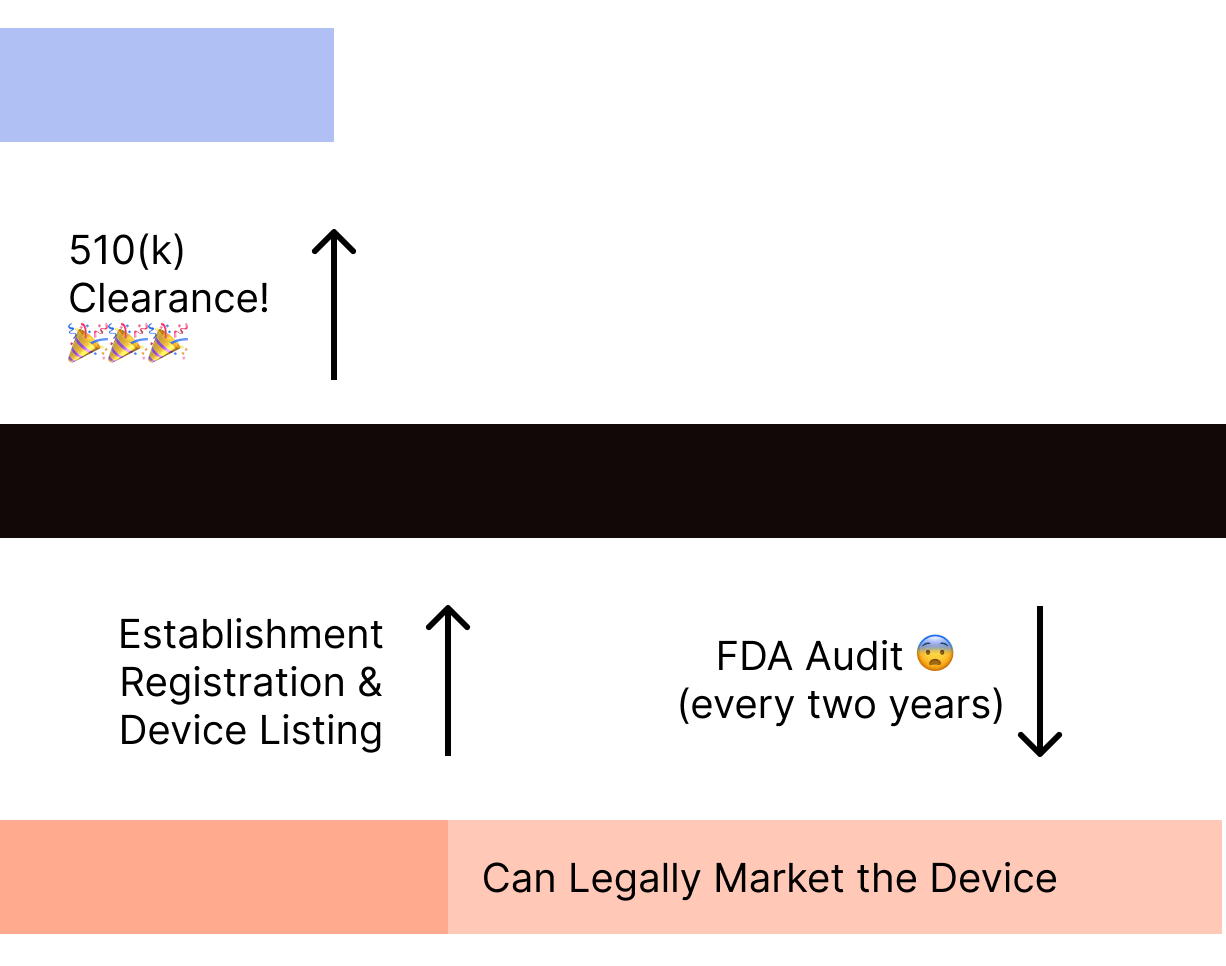
Register, list and assign UDI with regulatory. Connect complaints from engineering's support channel and cybersecurity's monitoring into one CAPA process with clear owners.
Issue a device identifier through an accredited agency, use the software version and release date as the production identifier, and enter the record in GUDID. Show the UDI on a non-transient about screen, or in the generated report when the device has no user interface.
Every complaint is logged and investigated. Quality decides whether it describes a death, serious injury or malfunction that could cause one, which makes it a medical device report with a fixed deadline. Software anomalies found this way also feed the anomaly list.
Usually when there is a trend, such as several anomalies traced to the same software item, or when a single event shows a systemic process failure. One-off defects are handled through problem resolution and change control.
Each change is assessed with FDA's change guidance and documented in the design history file. Bug fixes and cybersecurity patches are usually documented internally, while a change to the indications or a new risk usually needs a new submission.
See the open positions and apply.