
The clinical performance report states the results against every pre-specified endpoint, describes the test data, the reference standard and reader agreement, and gives the subgroup tables. Usability is settled through a human factors analysis and, where users interpret outputs, an evaluation with representative users. The same numbers then flow into the eSTAR performance testing section, the labeling, and the 510(k) summary.
On the map: Clinical performance report. Usability with representative users. Statistics sections for the eSTAR.
Rows are disciplines, columns are stages 1 to 8. Select a square to open that task.
Back to the full map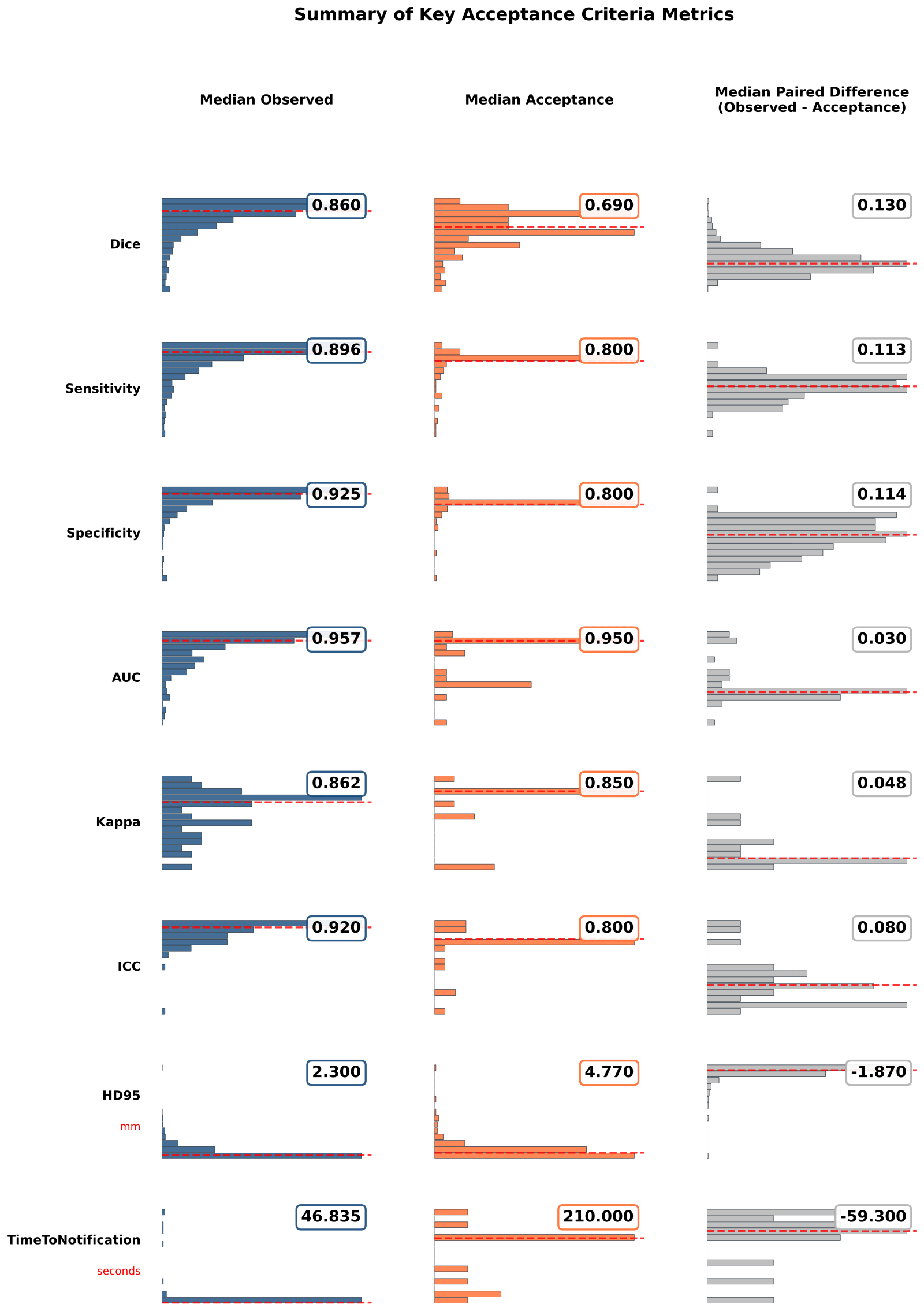
Give regulatory the final statistics with confidence intervals in the eSTAR's terms. Check the user manual's performance claims against exactly what the study measured.
It is reported as observed next to its pre-specified target and labelled as missed, with a short clinical argument. A missed secondary endpoint can usually be submitted with that justification. A missed primary endpoint sends the team back to iterate the model, narrow the labeling, or justify a lower target from a predicate or literature.
The human factors analysis decides. If no critical task exists, for example a device with no user interface, the analysis itself is documented. If users read and act on outputs, a usability evaluation with representative users tests whether they find and apply the key information. For reader aids the reader study often covers much of this.
The performance testing section carries the protocol summary, data sources and sites, reference standard method, results with confidence intervals, and subgroup results, with the full report attached. The financial disclosure and ClinicalTrials.gov certification forms depend on whether a clinical investigation took place, so a retrospective study gets a short justification instead.
Enough that a reviewer can check independence and representativeness without asking: cases per site, site separation between training and test, scanner makers, protocols, demographics, and confounders for each set. Gaps here are a common source of additional information requests.
See the open positions and apply.