
Deficiency responses often change software, labeling or test protocols. Quality makes sure each change goes through the same change control as any other release, with a new version number, regression analysis, re-verification and updated design documents. While FDA reviews the file, quality also stands up the processes the company needs before it can legally sell, such as complaint handling, CAPA and medical device reporting.
On the map: Every fix through change control. Re-verification. Complaints, CAPA and MDR before launch.
Rows are disciplines, columns are stages 1 to 8. Select a square to open that task.
Back to the full map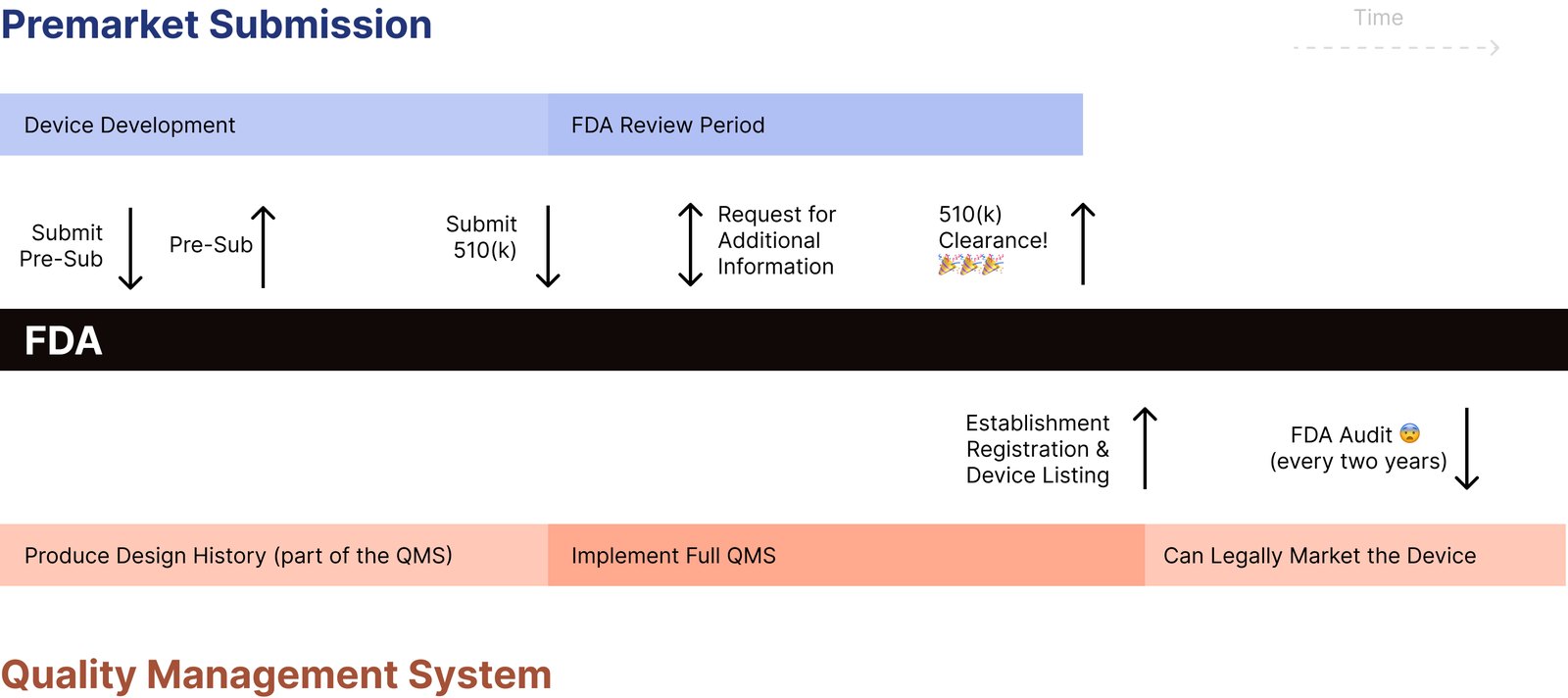
Route every deficiency fix through change control and re-verification. Use the review months to finish the complaint, CAPA and MDR procedures before the device can ship.
If the answer requires changing code, a default value, or a test that FDA found inadequate, yes. The change gets a problem report, a version bump, updated requirements and protocols, and a new verification report for that version.
Decide from the regression analysis. Tests that FDA questioned are revised and re-executed, tests touching changed code are re-run, and the rationale for skipping the rest is written down.
Keep the submitted documents, the version history and the build that will ship in agreement. If later fixes are made during review, the response lists the updated documents and versions so FDA reviews the version that will be released.
At minimum, complaint handling, CAPA, medical device reporting, document control and change control must be operating on the day the device is first sold. Starting them during the review period avoids a gap between clearance and launch.
See the open positions and apply.