
Every change to a cleared device gets a documented regulatory assessment before release. The assessment walks the decision points in FDA's 2017 change guidances and ends in a letter to file, a Special 510(k) or a Traditional 510(k). Changes covered by an authorized PCCP are made under its protocol and recorded in the quality system. Changes released between submission and clearance are assessed too.
On the map: Change assessments. Letter to file, Special or new 510(k). PCCP.
Rows are disciplines, columns are stages 1 to 8. Select a square to open that task.
Back to the full map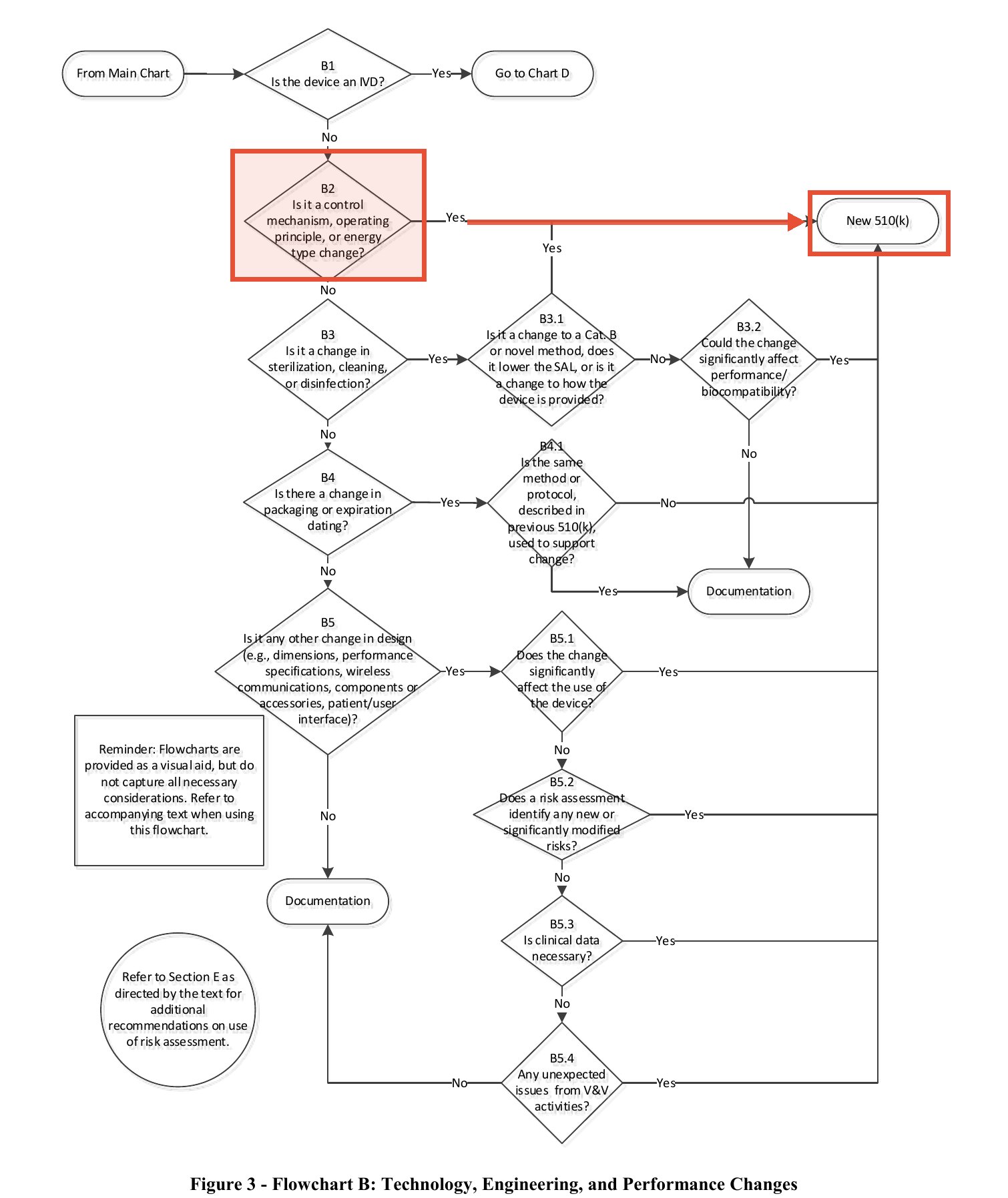
Assess every proposed change with engineering, clinical and cybersecurity before work starts. Use the PCCP where it fits, and keep a written rationale for each letter-to-file.
Answer each decision point in writing, with the reasoning and the regression evidence. Treat changes to risk controls, to what the device detects or measures, to its autonomy or to its claims as likely to need a new 510(k). Then read the assessment the way an investigator would.
A Special 510(k) fits a change to the company's own cleared device when well-established methods can show the change works and the results can be reviewed in summary form. A change that adds a finding or needs a new clinical performance study usually goes Traditional.
A PCCP fits changes that are planned, specific and testable against acceptance criteria set in advance, such as retraining on new data or adding input devices. It must be in the original submission and cannot change the intended use. Weigh the extra premarket work against the number of future 510(k)s it would replace.
List every release between submission and clearance and assess each one against the cleared version. Record the outcome as a letter to file or plan the next submission.
See the open positions and apply.