
After clearance the team watches how the device performs on real inputs: complaints and adverse event databases at a minimum, and for AI devices the drift in input data, output distributions, failure rates and periodic checks against expert review. The study is closed out by archiving the locked test set, reference annotations, protocol versions, deviations, analysis code and outputs under version control. The archived test set becomes the regression benchmark for future model versions.
On the map: Real-world performance monitoring. Close out the study and archive its records.
Rows are disciplines, columns are stages 1 to 8. Select a square to open that task.
Back to the full map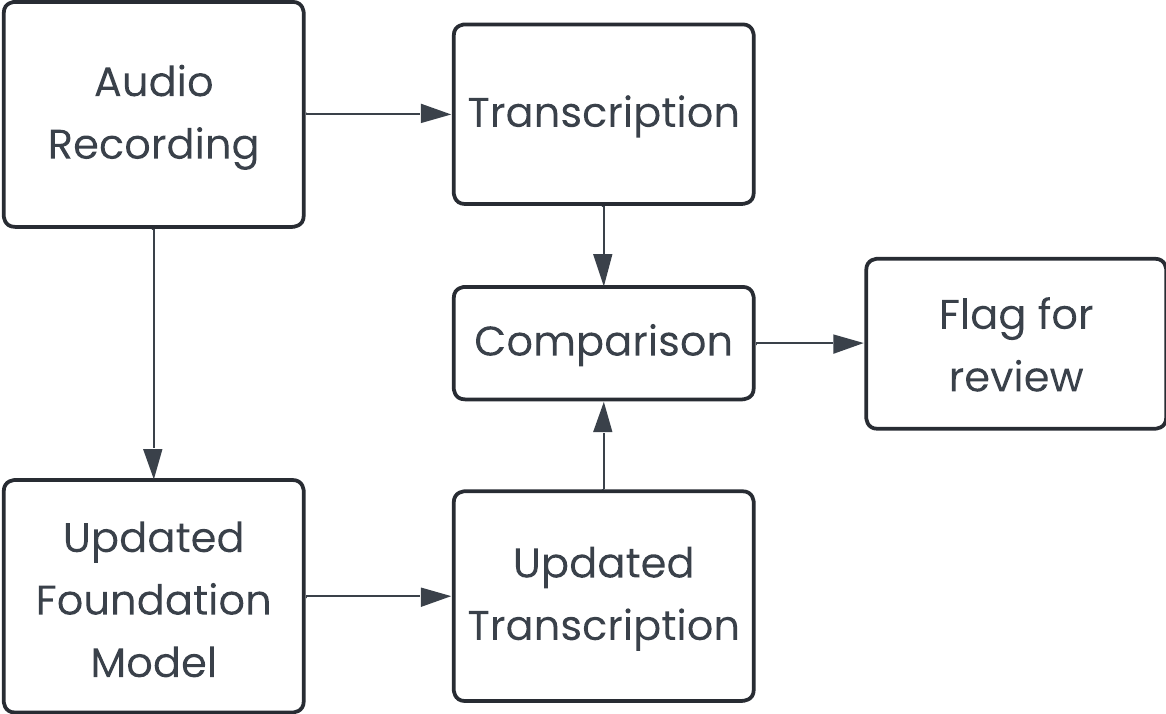
Set up real-world performance monitoring within engineering's telemetry limits and quality's complaint process. Any drift signal needs a defined path into a CAPA or a change assessment.
Signals are chosen from the risk analysis: shifts in scanner makers, protocols or patient mix, rising no-output or failure rates, and changes in the output distribution. Each signal gets a threshold and an owner. A breach opens an investigation under complaint handling or CAPA.
Keeping inputs, or a way to retrieve them, lets the team re-run them on a new model and compare outputs. The trade-off is privacy and liability, so the decision covers de-identification, where the data lives, and how long it is kept.
Everything needed to reproduce the reported numbers: the frozen dataset with version hashes, access records showing the test set stayed sequestered, the reference annotations, the analysis code and outputs, and the protocol and deviation history, plus any IRB or site closure records.
It can serve as a regression benchmark for a modified device or a PCCP, provided it stayed hidden from developers. Once the team has tuned against it, fresh cases are needed for the next pivotal claim.
See the open positions and apply.