
While the software is built, the regulatory lead writes the substantial equivalence argument, drafts the user manual and labels, and starts the 510(k) summary. The indications for use statement is written once and reused word for word in the summary, the labeling and the eSTAR.
On the map: Substantial equivalence discussion. Labeling and IFU drafts. Start the 510(k) summary.
Rows are disciplines, columns are stages 1 to 8. Select a square to open that task.
Back to the full map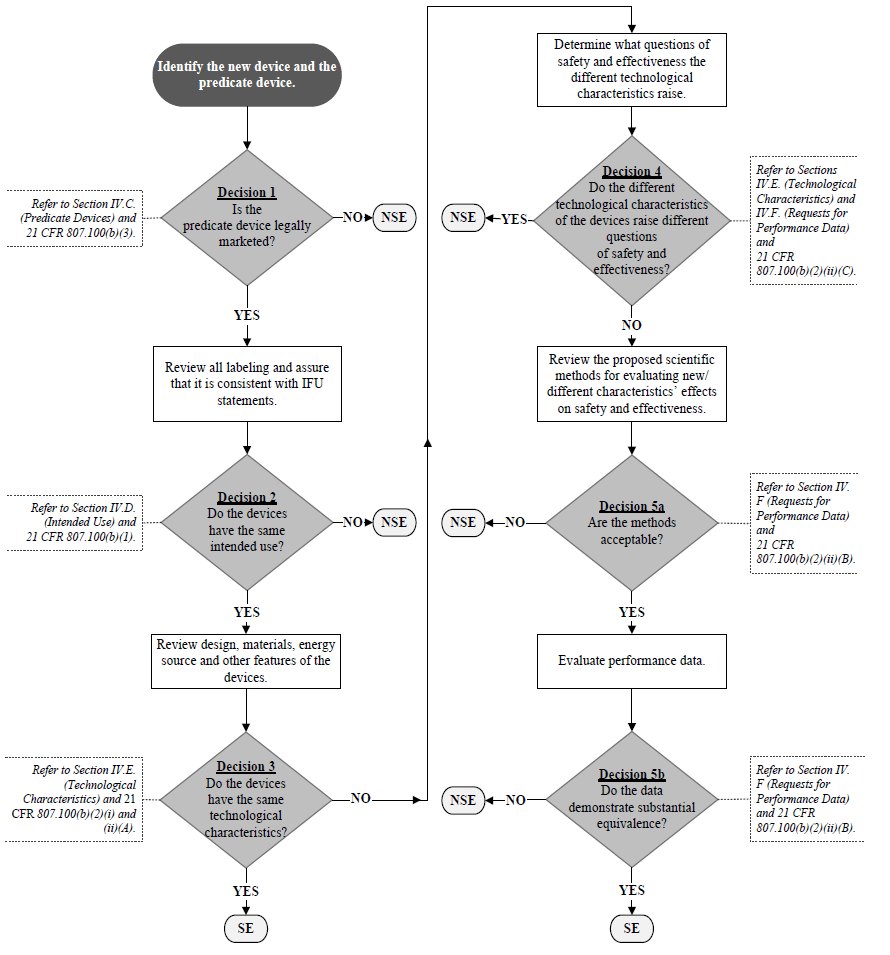
Keep labeling drafts in step with engineering's sprint outputs and cybersecurity's controls. Every claim in the IFU needs a requirement and a test behind it before verification starts.
Follow FDA's decision flowchart. Show the same intended use, list each technological difference, state why it raises no different question of safety or effectiveness, and point to the performance data that supports it.
Trace each risk control that relies on labeling to a warning or instruction, and verify that the text is present in the manual. The indications section matches the indications for use statement exactly.
Cover each element of 21 CFR 807.92, including the indications for use statement. For AI devices, include the training and test data, the reference standard and the performance results, because FDA now asks for them.
See the open positions and apply.