
Once the intended use and study design are settled, the requirements, user needs and the datasets they depend on are reviewed, approved and placed under document control. From that point every change goes through change control. In parallel, the suppliers who will produce evidence are qualified: data providers, the annotation platform, annotators and reader sites. Their selection criteria, training and contracts are recorded before the work begins.
On the map: Design inputs under document control. Qualify data, annotation and reader-site suppliers.
Rows are disciplines, columns are stages 1 to 8. Select a square to open that task.
Back to the full map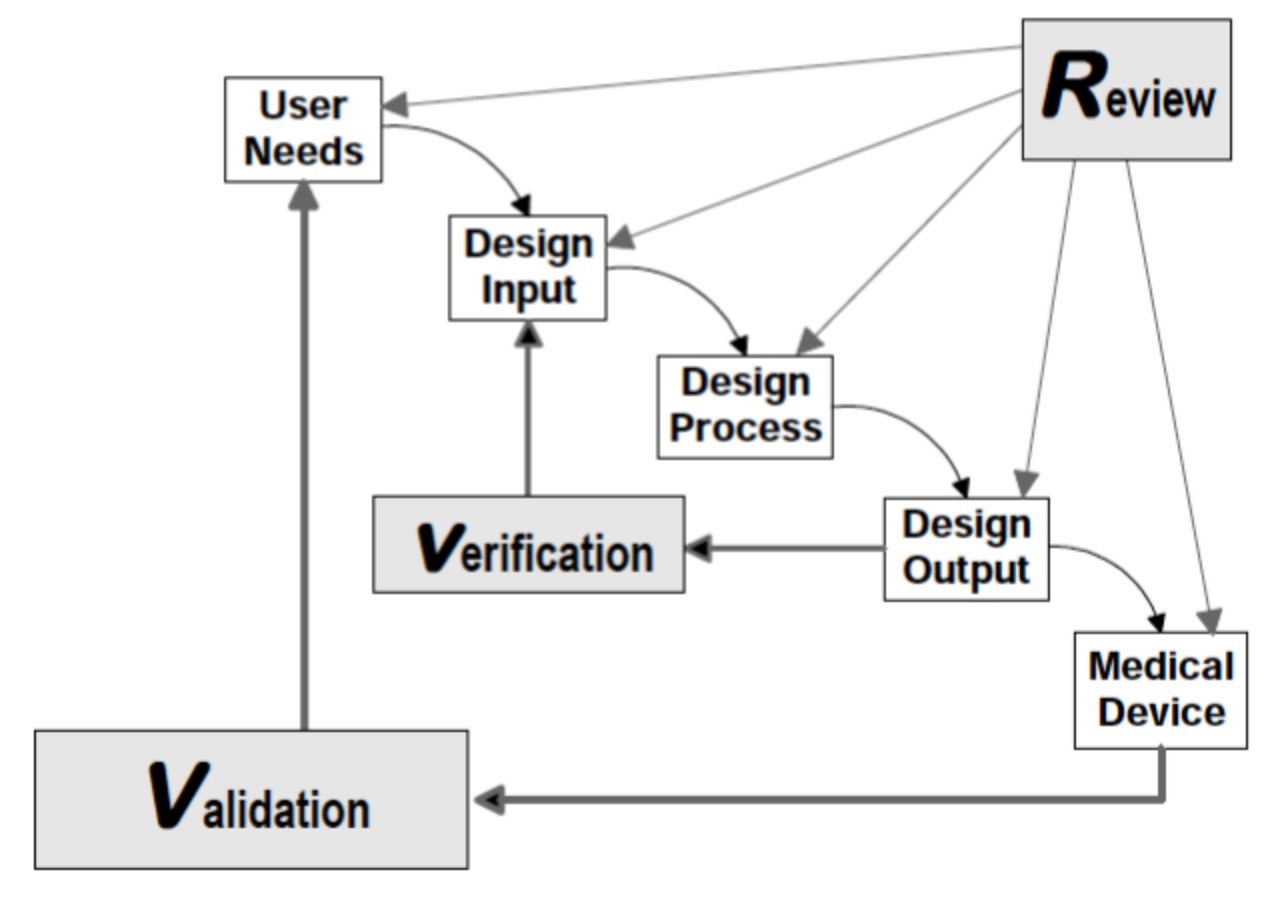
Put design inputs under document control once engineering and clinical agree on them. Qualify data, annotation and reader-site suppliers before clinical signs contracts.
The 1997 design control guidance says the design input becomes a controlled document after review and approval. Locking too early creates paperwork churn while the design is still moving. The usual point is the first formal design review, once the user needs and top-level requirements are stable enough that changes are worth tracking.
The sequestered test set is treated as a controlled record. It is version controlled, stored apart from training data, and access by the development team is restricted so the locked model is never tuned on it.
Recorded criteria for selection (credentials, experience, an FDA-cleared annotation tool where possible), a written instruction set, a calibration or practice round with quality control, and a contract that allows alternate readers to be onboarded mid-study.
Any site or vendor whose data ends up in the training or test set. The agreement covers de-identification, data provenance and the right to use the data in a regulatory submission.
See the open positions and apply.