
The regulatory lead finishes the 510(k) summary once the verification and performance reports are final. The summary is the public record of the clearance, so it states the indications for use, the predicate comparison, the testing and the substantial equivalence conclusion in plain terms. Every number and claim in it is checked against the final reports. The lead also prepares the truthful and accurate statement for a responsible company official to sign.
On the map: Final 510(k) summary. Truthful-and-accurate statement. Fold performance results into the claims.
Rows are disciplines, columns are stages 1 to 8. Select a square to open that task.
Back to the full map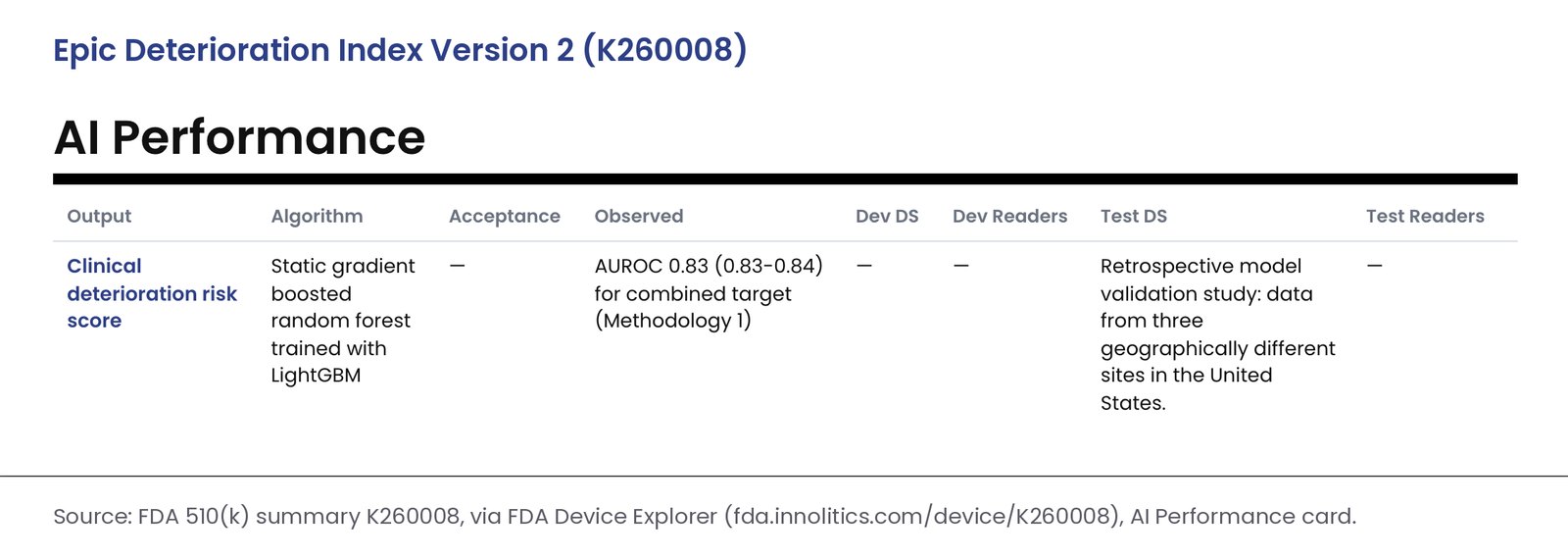
Write the 510(k) summary only from clinical's final numbers and engineering's verified version. Confirm with quality that every cited report is approved and matches the release.
For an AI device, FDA expects the summary to report the test statistics against the acceptance criteria, the number of patients and sites, the demographics, how the reference standard was set, and how the test data was kept apart from the training data. Write that section once from the final report, and leave out anything confidential, because FDA publishes the summary after clearance.
Read each claim in the summary, labeling and device description against the endpoint that supports it. A claim with no endpoint behind it is removed or reworded. A missed secondary endpoint is reported as missed, with the reasoning for why safety and effectiveness are still supported.
The eSTAR can build a summary from the form fields, but an attached summary gives control over wording and the comparison table. Most teams attach their own and reuse the comparison table from the substantial equivalence discussion so the two documents cannot drift apart.
A responsible official of the submitting company signs it after the final package review. If the primary correspondent is a company representative, it can be signed inside the eSTAR. Otherwise it goes in as a separate attachment.
See the open positions and apply.